
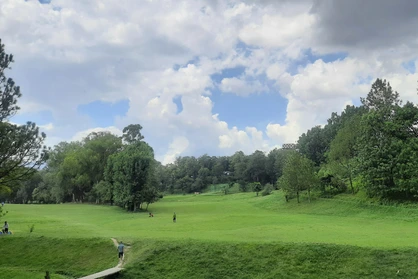
Nepal is not the first country that comes to mind when someone mentions golf. Golf in Nepal offers a unique blend of world-class scenery, rich history, and memorable playing experiences that many travellers overlook. From the historic fairways of Kathmandu to the mountain-backed courses of Pokhara, Nepal is home to golf courses unlike anywhere else in South Asia.
Golf sits quietly alongside the trekking, mountaineering, and river rafting activities in Nepal’s adventure sports. You can experience golf courses that hold some of the most dramatic backdrops of any fairway in the world, largely unknown to the international golfing community. All these and that also with a history that goes back further than most people would expect.
For travellers who planning a golf holiday in Nepal, or for those who want to understand a different dimension of the country’s sporting and cultural landscape, the story of golf in Nepal is worth knowing.Alongside the history we will explore Nepal’s leading golf courses, current golfing culture, and the opportunities shaping its future.
Quick Insight on Golfing in Nepal
- Golf has been part of Nepal since 1926, with roots in the Rana era and royal patronage.
- Nepal’s top golf courses include Royal Nepal Golf Club, Gokarna Forest Golf Course, and Himalayan Golf Course in Pokhara.
- Gokarna Forest Golf Course is Nepal’s premier golf destination, known for its forest setting and wildlife.
- The Himalayan Open has helped put Nepal on the international golfing map.
- Golf in Nepal is growing through junior development programs despite challenges like limited courses and high equipment costs.
- Nepal offers a unique opportunity to combine golf with trekking, cultural tours, and adventure travel in one itinerary.
The Origins: Golf in Nepal's Royal Era
Golf arrived in Nepal through the Rana oligarchy, the hereditary prime ministers who ruled Nepal from 1846 to 1951 while the monarchy was sidelined. The Ranas maintained close ties with British India and adopted many of the cultural practices of the British colonial establishment, golf among them.
The Royal Nepal Golf Club in Kathmandu was established in 1926, making it one of the oldest golf clubs in South Asia. The course was originally developed for the Rana elite and their British associates, a private recreational facility in a country that was closed to most outsiders until 1951, when King Tribhuvan ended the Rana regime and opened Nepal to the world.
The post-1951 period saw golf remain closely associated with the royal family and the Kathmandu establishment. King Mahendra and later King Birendra were both golfers, and the sport retained its elite association through the second half of the twentieth century. The royal patronage gave Nepali golf a profile that its small player base would not otherwise have sustained.
The Courses: Where Golf Is Played in Nepal Today
Nepal currently has a small number of operational golf courses, concentrated in Kathmandu with additional facilities in Pokhara and a handful of other locations. The courses are modest by international championship standards, but what they lack in scale, they more than compensate for in setting.
Royal Nepal Golf Club, Kathmandu
The Royal Nepal Golf Club was established in 1917 as the original Gauchar Golf Club. The Royal Nepal Golf Club (RNGC) is Nepal’s oldest golf club and one of the oldest golf clubs in South Asia. The course was founded by General Kiran Shumsher after he was introduced to golf during a visit to Scotland. In 1965, King Mahendra granted the club its “Royal” status, giving it the name it carries today. Over the decades, repeated expansions of the adjacent Tribhuvan International Airport reduced the original course, resulting in today’s challenging 9-hole, par-34 layout.
Located in Tilganga, just beside Tribhuvan International Airport, the Royal Nepal Golf Club offers a unique urban golfing experience where players can enjoy a historic course surrounded by mature trees and occasional views of the Himalayan foothills on clear days. Despite its compact size, the course is known for its narrow fairways, strategic water hazards, and technical design that rewards accuracy over power. It regularly hosts national tournaments, including events on the Surya Nepal Golf Tour, and remains the home of Nepal’s competitive golfing community. Visitors are welcome to play by pre-bookings, with club and caddie services available for international golfers.
Gokarna Forest Golf Course, Kathmandu
The Gokarna Forest Golf Course is the most internationally recognised golf facility in Nepal and the one most likely to appear on lists of Asia’s distinctive golf experiences. The 18-hole course occupies land within the Gokarna Forest Reserve on the northeastern edge of Kathmandu, where deer graze on the fairways, and the forest edge provides a backdrop that no constructed course can replicate.
The Gokarna course is attached to the Gokarna Forest Resort and is accessible to resort guests and visiting golfers. The combination of forest setting, wildlife encounters on the course, and views across to the surrounding hills makes it one of the more memorable golf experiences available anywhere in South Asia. For international golfers visiting Nepal, Gokarna is the destination course.
Himalayan Golf Course, Pokhara
The Himalayan Golf Course in Pokhara operates against the backdrop of the Annapurna range. The course sits in the valley that frames Pokhara, with the Fishtail peak (Machapuchare) and the Annapurna massif visible from the fairways on clear mornings. The setting is arguably the most dramatic of any golf course in Nepal, and the combination of mountain backdrop with the lake and valley landscape of Pokhara makes it a distinctive experience for golfers who play it.
Pokhara itself is Nepal’s second popular city for tourist and travellers, the primary hub for Annapurna region trekking and adventure tourism. A golf round at the Himalayan Golf Course fits naturally into a Pokhara itinerary alongside lakeside activity and the broader adventure sports scene the city supports.
The Himalayan Open: Nepal's Golf on the International Stage
Nepal’s most significant contribution to international golf is the Himalayan Open, a professional tournament that has been held at the Gokarna Forest Golf Course and has attracted professional players from the Asian Tour circuit. The tournament has given Nepali golf an international profile that the domestic game’s small scale would not otherwise generate.
The Himalayan Open sits alongside a small number of other high-altitude and environmentally distinctive tournaments globally that market the setting as the defining feature of the experience. Gokarna’s forest and wildlife setting delivers genuine distinctiveness rather than borrowed prestige, and the tournament has consistently received positive coverage from golf media for the quality of the experience it offers participants and spectators.
The Current State of Golf in Nepal
Nepal’s golf community remains small by regional standards. Estimated active golfers number in the low thousands, concentrated in Kathmandu with smaller communities in Pokhara and a few other centres. The sport still carries some of its historical association with the urban professional class and the expatriate community, though this is changing as the game becomes more accessible.
The junior development programmes that have emerged in recent years represent the most significant structural shift in Nepali golf. Several clubs now run junior coaching initiatives that are producing a generation of young Nepali golfers whose relationship with the game is rooted in aspiration and skill development rather than social membership. The results are appearing in regional amateur competitions where Nepali juniors are performing with increasing competitiveness.
Caddying has historically provided employment at Nepal’s golf courses and created a pipeline of golf knowledge within communities adjacent to the courses. Several Nepali caddies have transitioned into coaching and club professional roles, building the technical capacity of the game from the ground up rather than exclusively from the top down.
The Challenges
Nepal’s golf development faces constraints that are structural rather than attitudinal. Land availability in Kathmandu is a significant limiting factor. The courses that exist occupy land that was allocated in a different era, and the pressure on available land in the valley makes new course development extremely difficult.
Maintenance standards at Nepal’s courses reflect the resources available rather than the ambition of the operators. The Gokarna course benefits from resort backing that allows better maintenance than purely club-operated facilities can sustain. The gap between the potential of Nepal’s golf settings and the infrastructure available to realise that potential is one of the defining challenges for the sport’s development.
Equipment access and affordability remain barriers for broader participation. Golf equipment in Nepal is imported and priced accordingly, which places the sport out of reach for most Nepalis who would otherwise be interested. The growth of second-hand equipment availability and club-owned rental sets has improved this, but the cost barrier remains meaningful.
The Future: What Nepali Golf Could Become
The case for golf tourism in Nepal is underwritten by geography that cannot be manufactured. The combination of courses within view of the highest mountains on earth, wildlife on the fairways at Gokarna, and the general backdrop of a country that offers extraordinary natural landscapes is a proposition that no amount of course construction elsewhere can replicate.
The international golf tourism market has shown consistent interest in destination golf experiences that combine high-quality playing conditions with travel experiences unavailable elsewhere. Nepal checks the travel experience component definitively. The development question is whether the course infrastructure can be brought to a standard that converts interested visitors into arriving ones.
Investment in course quality, particularly at Gokarna and the Himalayan Golf Course in Pokhara, would position Nepal as a genuine destination for the segment of international golfers who prioritise experience over competition standards. A golfer who plays Gokarna with deer on the fairways and a Himalayan backdrop, or who tees off in Pokhara with Machapuchare above the treeline, is not measuring the experience against Augusta or St Andrews. They are experiencing something those places cannot offer.
The parallel development of golf alongside Nepal’s existing adventure tourism infrastructure also creates natural packaging opportunities. A Nepal itinerary that combines trekking, cultural visits, and a round at Gokarna or the Himalayan Golf Course serves a traveller profile that the industry has not fully addressed yet.
Plan Your Golf Holiday in Nepal with Adventure World Travel
Whether you’re looking to play a round at the historic Royal Nepal Golf Club, experience the wildlife-lined fairways of Gokarna Forest Golf Course, or tee off beneath the Annapurna range in Pokhara, Adventure World Travel can create a customised Nepal itinerary that combines golf with the country’s iconic trekking, cultural, and wildlife experiences.
Adventure World Travel can incorporate golf at Nepal’s courses into broader Nepal itineraries for travellers who play. Contact the team at adventureworldtravels.com to discuss how you can fit golf into your trip.
FAQs
1. Can international visitors play golf at Nepal's courses?
Yes. The Gokarna Forest Golf Course in Kathmandu and the Himalayan Golf Course in Pokhara both welcome visiting golfers. Green fees and availability can be arranged through the courses directly or through Adventure World Travel as part of a broader Nepal itinerary. The Royal Nepal Golf Club in Kathmandu also accepts visitors. Equipment rental is available at the main courses for travellers who do not bring their own clubs.
2. What is the best golf course to play in Nepal?
The Gokarna Forest Golf Course is the most internationally recognised and the one most frequently cited by visiting golfers as the standout experience. The 18-hole layout within the Gokarna Forest Reserve, with deer on the fairways and forest surroundings, is genuinely distinctive. The Himalayan Golf Course in Pokhara is the strongest alternative, with mountain views that are arguably the most dramatic of any course in Nepal.
3. When is the best time to play golf in Nepal?
Spring from October to May and autumn from September to November are the most comfortable months for golf in Nepal. The monsoon from June to August brings significant rainfall that affects course conditions, particularly at open courses. October and November offer the clearest skies and the best mountain views from the courses that face the Himalayan range.
4. Has Nepal produced any professional golfers?
Nepal has produced competitive amateur golfers and has a developing junior programme that is producing increasing regional competition results. The professional circuit has seen limited Nepali participation to date, though the Himalayan Open at Gokarna has provided exposure to professional tournament golf for the local golfing community. The junior development programmes currently in place represent the most likely pathway to professional-standard Nepali golfers in the coming decade.
5. Can golf be combined with trekking or other adventure activities in a Nepal itinerary?
Yes, and the combination works naturally. Kathmandu-based cultural visits and a round at Gokarna can precede or follow an Annapurna or Everest region trek without logistical complexity. Pokhara, as the hub for Annapurna trekking and adventure sports, provides the Himalayan Golf Course as a natural addition to a Pokhara programme. Adventure World Travel builds combined itineraries that incorporate golf alongside trekking, cultural tourism, and other Nepal experiences for travellers who want both.