A Complete History of Nepal's Elite Golf Scene: Royal History of Golf in Nepal
Golf arrived in Nepal the same way most things arrived in Nepal during the early twentieth century: through the Ranas. The hereditary prime ministers who governed the country for over a century maintained a careful distance from the outside world while simultaneously cultivating the cultural habits of the British colonial establishment they admired. Golf was one of them. Whisky was another. The two have coexisted at Nepal’s golf clubs ever since.
What began as a private recreation for one of Asia’s most insular ruling families has evolved into a sport with international tournament history, a developing junior scene, and courses that hold some of the most extraordinary natural settings of any fairway on earth. The history of golf in Nepal is not long by global standards, but it is specific, layered, and connected to the political and cultural history of the country in ways that make it worth understanding properly.
The Rana Era: Golf Arrives in Kathmandu
The Rana regime ran Nepal from 1846 to 1951. The Ranas held the position of hereditary prime minister, effectively sidelining the Shah monarchy and running the country as a personal estate. Nepal was closed to outsiders, economically stagnant for most of its population, and extraordinarily opulent for the Rana elite who built massive palaces modelled on European architecture and filled them with chandeliers, billiard tables, and imported luxuries.
The Ranas maintained diplomatic and social relationships with British India, and the habits of the British officer class filtered into Rana social life. Polo was played. Cricket was taken up. And golf found its way onto a patch of Kathmandu valley land that would become the Royal Nepal Golf Club.
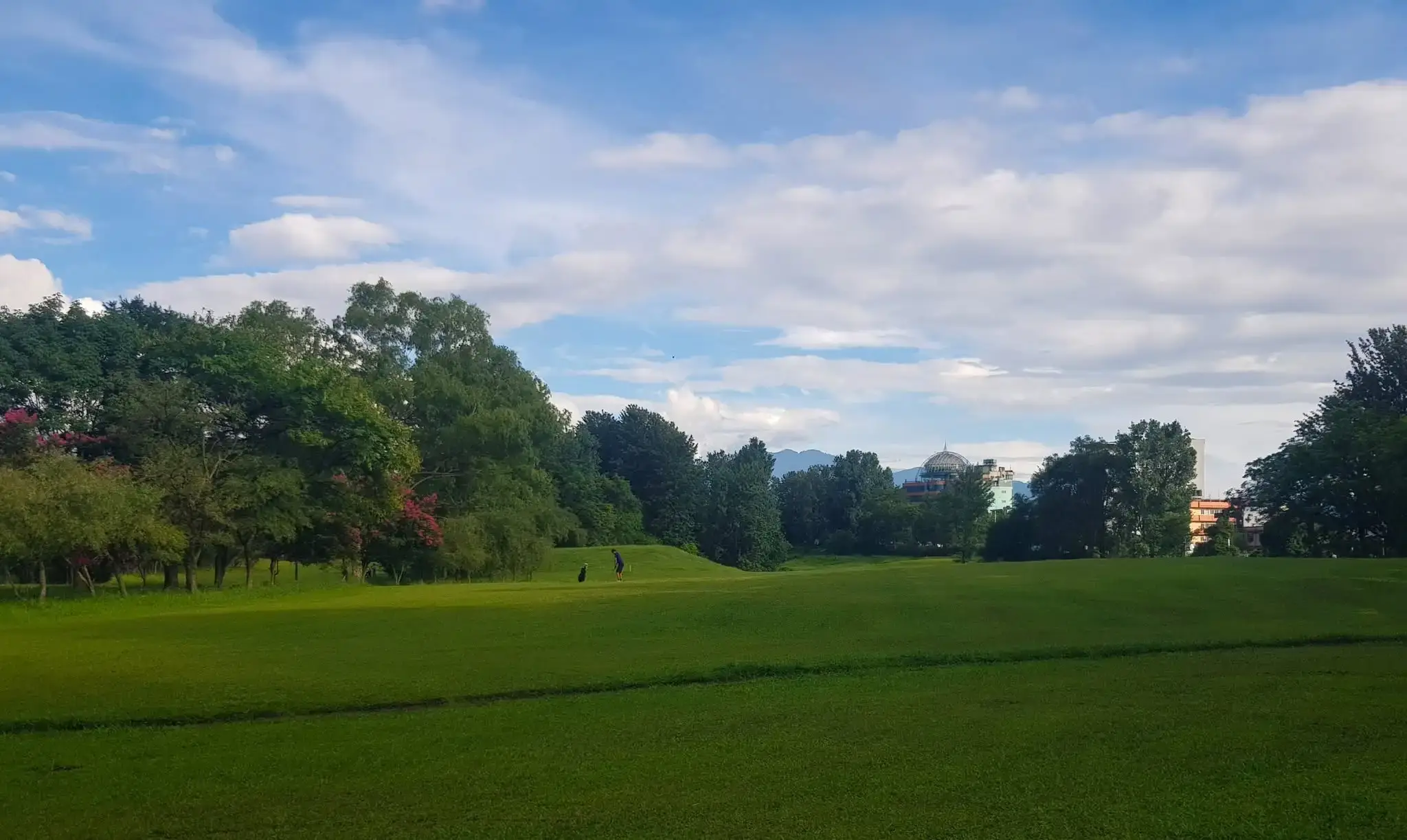
The Royal Nepal Golf Club was established in 1926, making it one of the oldest golf clubs in South Asia. The founding membership was drawn from the Rana families and their British associates, a private facility in a country where privacy was the defining characteristic of power. The course was not open to the general public in any meaningful sense. It was an extension of the Rana social world, a place where the ruling class played a game they had borrowed from the empire they admired.
This origin gives Nepali golf a character that still faintly persists: an association with social standing, with the establishment, and with a version of cosmopolitanism that was specific to Kathmandu’s elite rather than to the country at large.
1951 and After: Golf in the New Nepal
The end of the Rana regime in 1951 changed Nepal’s relationship with the outside world fundamentally. King Tribhuvan’s restoration of royal power and the opening of the country to foreigners introduced a new cast of characters into Kathmandu’s social life: diplomats, development workers, mountaineers, and eventually tourists. The Royal Nepal Golf Club found a new membership pool in this incoming community alongside the old Rana families and the emerging professional class of the new Nepal.
Golf’s association with the monarchy deepened through the 1950s and 1960s. The sport was played by the royal family and by the senior officials of the new government, which kept its elite character intact even as the country around it was undergoing fundamental political transformation. The club became a place where the old establishment and the new mixed in the specifically levelling context that golf tends to create, where the quality of your game matters more than the quality of your credentials, at least on the course.
King Mahendra, who came to power in 1955 and introduced the panchayat system that concentrated power back in royal hands, was a golfer. The sport’s royal connection was maintained through his reign and through that of his son King Birendra, who succeeded him in 1972. The Royal Nepal Golf Club’s name was not incidental. It reflected a genuine royal patronage that sustained the club’s prestige through decades when Nepal’s broader sporting culture was focused on football and cricket.
The Gokarna Chapter: International Golf Comes to Nepal
The establishment of the Gokarna Forest Golf Course in the 1990s represented a step change in Nepal’s golf infrastructure. Where the Royal Nepal Golf Club was a nine-hole facility with origins in a closed, elite social world, Gokarna was designed as an eighteen-hole course within the Gokarna Forest Reserve, connected to a luxury resort, and positioned explicitly for the international visitor market.
The Gokarna course changed what was possible for golf in Nepal. An eighteen-hole layout within a forest reserve where deer graze on the fairways, designed to international standards and maintained by a resort operator with commercial incentive to keep quality high, was a genuinely different proposition from the club-based facilities that had previously defined the sport in the country.
The course’s setting is its defining characteristic. The Gokarna Forest Reserve on the northeastern edge of Kathmandu is one of the valley’s preserved green spaces, and the course runs through it in a way that uses the forest rather than clearing it. Playing Gokarna is an experience defined by the environment rather than by the layout, and the environment is extraordinary.
The Gokarna development also introduced international golf tourism to Nepal as a viable market segment. Golfers visiting Nepal primarily for the playing experience, rather than as a secondary activity alongside trekking or cultural tourism, became a recognized category. The resort backing of the course meant it could be marketed through international golf channels in a way that a member-run club could not.
The Himalayan Open: Nepal on the Professional Circuit
The Himalayan Open at the Gokarna Forest Golf Course is the most significant development in Nepal’s golf history in terms of international profile. The tournament, held under the Asian Tour umbrella, brought professional golfers to Kathmandu and put Nepal’s golf on the international stage for the first time.
The Himalayan Open’s significance is not in the prize fund or the world ranking points it generates. It is in what it represents for a small golfing nation: the ability to host a professional event, to attract competitive players from across Asia, and to present the country’s golf infrastructure to an international audience. The tournament has received positive coverage in golf media precisely because the setting is unlike any other stop on the Asian Tour circuit. A professional golf tournament played in the shadow of the Himalayas, with deer wandering the course between shots, is a story that tells itself.
The tournament has had an on-and-off history, which reflects the broader challenges of sustaining international sporting events in a country with Nepal’s infrastructure and sponsorship market constraints. But its existence, even intermittently, has established that Nepal can host international professional golf and has given the sport a legitimacy within the country that domestic competition alone would take much longer to build.
The Himalayan Golf Course: Pokhara Enters the Picture
While Kathmandu held the historical centre of Nepal’s golf scene, Pokhara’s Himalayan Golf Course added a second significant facility and a second dimension to what golf in Nepal could be.
The Himalayan Golf Course sits in the Pokhara valley with the Annapurna range, including the distinctive peak of Machapuchare, visible from the fairways on clear mornings. The setting is arguably the most visually dramatic of any course in Nepal, which is a significant claim given the competition from Gokarna.
Pokhara’s course serves a different demographic from Kathmandu’s clubs. The city is Nepal’s second tourist hub, the gateway to the Annapurna trekking circuit, and the centre of the country’s adventure sports industry. Golf in Pokhara sits alongside paragliding, rafting, and lakeside leisure as one of the activity options available to visitors and residents, which gives it a less exclusively elite character than the Kathmandu clubs have historically carried.
Golf and the 2008 Transition: From Royal Nepal to Federal Nepal
The abolition of the monarchy in 2008 and Nepal’s transition to a federal republic changed the symbolic landscape of the country in ways that touched even golf. The Royal Nepal Golf Club, whose name carried the direct endorsement of a monarchy that no longer formally existed, continued operating but with the royal association no longer at the centre of the club’s identity.
The transition reflects a broader shift in Nepal’s social structure. The sport that began as an exclusively royal and Rana pastime is now played by a wider professional and business class, by the expatriate community in Kathmandu, and by a developing cohort of younger players who came to the game through caddying, coaching, and junior development programmes rather than through inherited social membership.
The caddying pipeline deserves specific mention. Golf caddies at Nepal’s courses have historically been recruited from communities adjacent to the courses, providing employment and creating a form of golf knowledge transfer that operates from the ground up. Several former caddies have moved into coaching and club professional roles, contributing to the technical development of the sport in ways that the traditional membership structure alone could not.
The Junior Development Era
The most significant structural change in Nepal’s golf history in the past decade is the emergence of junior development programmes at several clubs. These programmes represent a deliberate investment in the sport’s future that goes beyond sustaining the existing membership base.
Junior golfers produced by these programmes are appearing in regional amateur competitions with increasing frequency and with improving results. The generation of young Nepali golfers currently developing through structured coaching has a different relationship with the game from their predecessors, one rooted in skill development and competitive aspiration rather than social privilege.
This shift is the foundation of whatever Nepal’s golf future looks like. The sport’s historical association with elite social standing was always going to limit its growth. A pathway to golf that begins with a junior coaching programme rather than a family membership changes the sport’s demographic and its prospects simultaneously.
What the History Tells Us About Nepal's Golf Future
Nepal’s golf history is the story of a sport that arrived through the most exclusive possible channel, survived the political transformations that dismantled the world it was born into, and is now finding a broader base without losing the extraordinary natural settings that make it distinctive.
The courses that exist are not the infrastructure of a mass-participation sport. They are the infrastructure of a niche but significant golf tourism market and a developing domestic game. The opportunity is to build on both simultaneously, improving course quality to capture more of the international golf tourism market while expanding domestic access through junior programmes and more affordable participation pathways.
Adventure World Travel incorporates golf at Nepal’s courses into broader Nepal itineraries for visiting golfers. Contact the team at adventureworldtravels.com for discussions.
FAQs
1. When did golf first arrive in Nepal?
Golf arrived in Nepal through the Rana ruling family in the early twentieth century. The Royal Nepal Golf Club was established in 1926, making it one of the oldest golf clubs in South Asia. The sport was introduced through the Ranas’ social connections with British India and remained closely associated with Nepal’s royal and elite establishment for much of its history.
2. What is the Royal Nepal Golf Club, and is it still operating?
The Royal Nepal Golf Club is Nepal’s oldest golf club, established in 1926 in Kathmandu. It continues to operate as a nine-hole facility and serves as the institutional centre of organised golf in Nepal. Despite the abolition of the monarchy in 2008, the club continues under its historical name and remains the primary club-based golf facility in the capital, hosting national championship events and accepting visiting golfers.
3. What is the Himalayan Open and why does it matter for Nepal's golf history?
The Himalayan Open is a professional golf tournament held at the Gokarna Forest Golf Course under the Asian Tour umbrella. It represents Nepal’s entry into international professional golf and has given the sport a profile within the country that domestic competition alone would take much longer to build. The tournament’s significance lies in its demonstration that Nepal can host international professional golf and in the attention it has drawn to Nepal’s extraordinary golf settings from the international golf media.
4. How has golf in Nepal changed since the end of the monarchy in 2008?
The monarchy’s end removed the royal patronage that had defined Nepal’s golf establishment for decades. The sport has since evolved toward a broader professional and business class participation base, with the expatriate community and a developing younger generation of players reducing the sport’s historical dependence on royal and Rana social networks. Junior development programmes have been the most significant structural change, creating a pathway to the game that operates independently of inherited social membership.
5. What makes Nepal's golf courses historically and culturally significant?
Nepal’s golf courses are significant both for their historical origins in the Rana and royal eras and for their natural settings. The Royal Nepal Golf Club’s 1926 establishment makes it one of South Asia’s oldest courses. The Gokarna Forest Golf Course operates within a protected forest reserve with wildlife on the fairways, a setting with no equivalent on the Asian Tour circuit. The Himalayan Golf Course in Pokhara plays against the backdrop of the Annapurna range. The combination of historical depth and extraordinary natural setting makes Nepal’s golf history more layered than its small scale would suggest.