
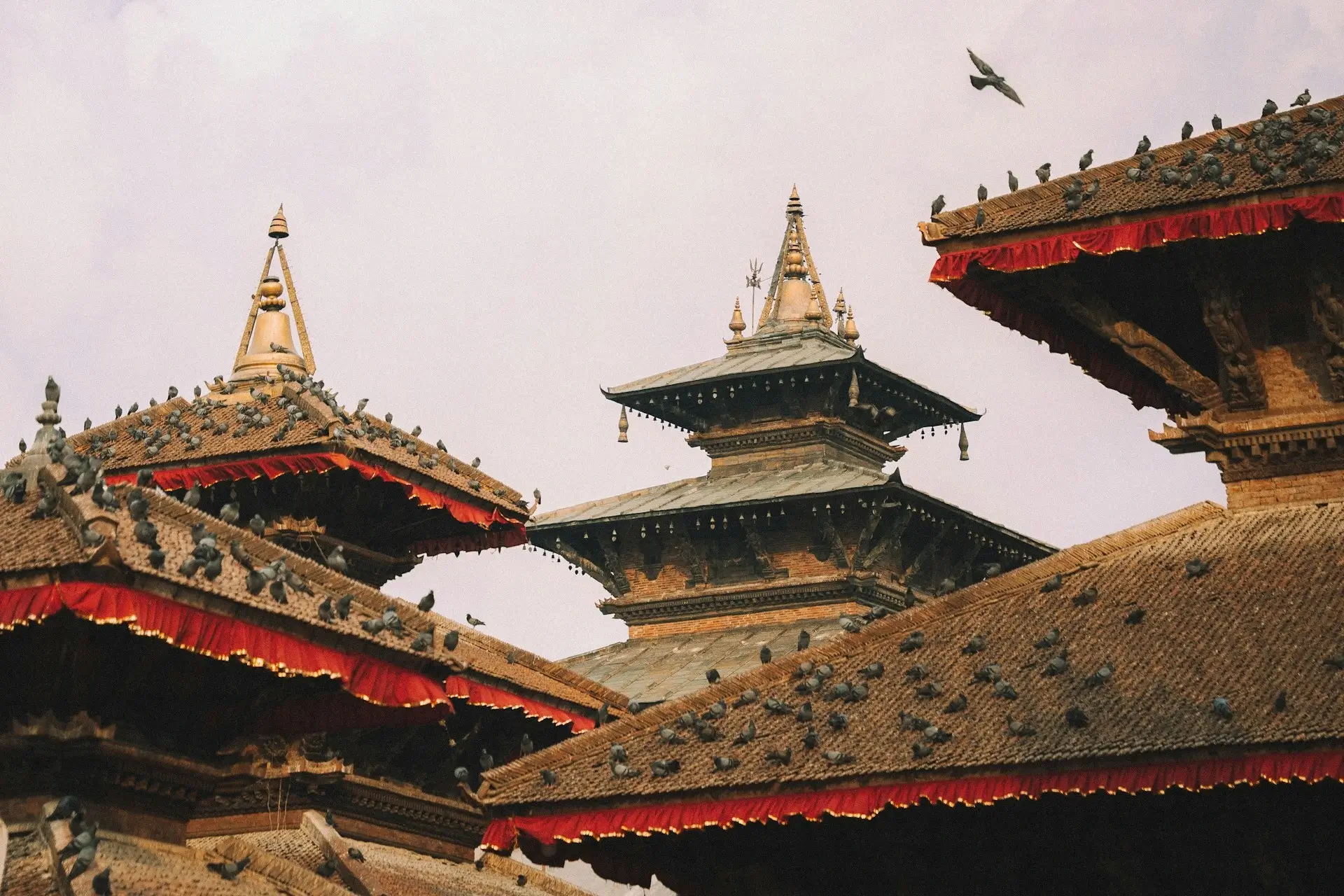
The Asta Matrika are eight mother goddesses who protect Kathmandu Valley. Their shrines form a sacred circuit across the valley. Each goddess guards a specific direction and holds a unique power.
The temples of Asta Matrika in Kathmandu are scattered across the valley form a protective spiritual circuit predating the city’s written history. These eight mother goddesses guard the valley’s cardinal and ordinal directions through shrines embedded in neighborhoods, hillsides, and ancient settlements. The tradition merges Hindu tantric practices with indigenous Newari worship creating living religious sites where daily rituals continue unchanged for centuries.
Understanding the Asta Matrika Tradition
Who Are the Asta Matrika?
The mother goddesses in Hinduism represent Shakti’s feminine power manifesting through different forms. Each goddess embodies specific attributes and protective powers. The Matrika cult combines Vedic traditions with local animistic worship giving these goddesses a distinctly Nepali identity.
Brahmayani represents knowledge and creation derived from Brahma. Maheshwari embodies destruction and transformation linked to Shiva. Kumari signifies youthful virginal power. Vaishnavi connects to Vishnu’s preserving force. Varahi appears as the boar-headed warrior goddess. Indrayani channels Indra’s celestial authority. Chamunda represents death and disease conquest. Mahalaxmi brings wealth and prosperity.
Why Are They Important in Kathmandu?
The goddesses protect Kathmandu Valley from directions following tantric cosmology. Ancient practitioners established temples at geographically significant points creating a mandala pattern. This sacred geometry channels divine protection while grounding spiritual energy in physical locations. The placement reflects deep knowledge of sacred geography.
Newari Buddhists incorporated the goddesses into their practices despite Buddhist philosophical differences with Hindu theism. The syncretism demonstrates Nepal’s religious flexibility where communities adopt and adapt practices across doctrinal boundaries. Buddhist variants of the shrines coexist with Hindu temples sometimes within meters of each other.
The circuit pilgrimage involves visiting all shrines ideally in a single day. Devotees circumambulate the valley receiving blessings from each goddess. The practice maintains spiritual protection for the valley and merit for practitioners. Annual festivals bring communities together, maintaining social bonds through shared religious practice.
The 8 Guardians: Asta Matrika in Kathmandu
The Astamatrika (Eight Mother Goddesses) are not merely statues in Kathmandu; they are the living “Ajimas” (Grandmothers) who define the spiritual boundary of the city. While many are housed in gilded temples, their most potent forms reside in Pithas—open-air shrines that connect the celestial realm directly to the soil of the valley.
- Brahmayani – Goddess of creation; linked to Brahma
- Maheshwari – Goddess of transformation; linked to Shiva
- Vaishnavi – Goddess of preservation; linked to Vishnu
- Indrani – Goddess of protection; linked to Indra
- Kaumari – Goddess of youth and courage; linked to Kartikeya
- Varahi – Warrior goddess with a boar head
- Chamunda – Goddess of death and time
- Mahalaxmi – Goddess of wealth and prosperity
Brahmayani (Pasikvah Ajima): The Gateway of Kamaladi
Brahmayani, known locally as Pasikvah Ajima, resides behind the historic Tindhara Pathshala in Kamaladi. As the Shakti of Brahma, she represents the primordial sound and the beginning of all things. In the Newar tradition, her pitha is a critical anchor for the city’s northeastern quadrant, bridging the gap between the old royal pathways and the modern commercial hub.
The shrine is an understated yet powerful stone platform, often draped in red cloth and surrounded by the scent of burning pala (oil lamps). Despite being tucked behind an educational institution, the pitha remains a quiet sanctuary where students and office workers pause to offer a pinch of sinhu (vermilion). Her presence here is a reminder that even in the rush of urban expansion, the “Creative Beginning” remains rooted in the city’s foundations.
Vaishnavi (Nay Ajima): The Protector of Pacali
Located in the historic riverfront area of Pacali, Vaishnavi is revered as Nay Ajima. She embodies the sustaining energy of the universe. Her pitha is situated near the confluence of the Bagmati and Vishnumati rivers, a location of sacred ritual importance.
Local lore connects Nay Ajima deeply with the community of the southern city. During the Pacali Bhairav Jatra, the energy of this pitha becomes palpable as masked dancers and traditional musicians converge here. The site is characterized by ancient stone carvings that have been smoothed by centuries of devotion. Visitors will notice the “Nay” (butcher) community’s traditional role in her upkeep, reflecting the a tradition where each community plays a specific role to the city’s spiritual maintenance.
Maheshvari (Mhayepi Ajima): The Peak of Purity
Mhayepi Ajima sits atop the lush hillock of Mhayepi, overlooking the northern stretches of the city. As Maheshvari, she carries the trident of Shiva and represents the transformative power of the soul. The climb to her pitha through a small forested area offers a rare moment of natural respite within the congested capital.
The Mhayepi pitha is unique for its hilltop “mandala” layout. It is widely believed that the hill itself is a natural power center. Local devotees often visit during the early morning hours, performing parikrama (circumambulation) around the entire hill. The atmosphere here is one of heavy silence, broken only by the rustle of leaves and the distant hum of the Ring Road, symbolizing the goddess’s role as a silent observer of the city’s evolution.
Indrani (Luti Ajima): The Vigilant Eye of Dhalko
Opposite the famous Shobha Bhagvati temple near Dhalko, Indrani—locally celebrated as Luti Ajima—guards the western banks of the Vishnumati. With her “thousand eyes,” she is the sentinel who protects the valley from epidemics and external threats. Her pitha is an essential stop for those performing the Matrika Puja circuit.
The shrine is deeply integrated into the riverside life. One can see locals washing clothes nearby while others sit in deep meditation by the pitha. The proximity to the river is no accident; water is the medium through which her purifying energy flows. During her annual festival, the narrow alleys of Dhalko transform into a sea of flickering lamps, as the neighborhood honors her for keeping the “shadow of Indra” over their homes.
Kaumari (Vatvatni Ajima): The Youthful Energy of Maitidevi
Often associated with the sprawling Maitidevi area, Kaumari is worshipped as Vatvatni Ajima. She is the eternal maiden and the commander of the divine army. Unlike the more somber pithas, her presence in the Maitidevi vicinity feels vibrant and energetic, mirroring the youthful spirit of the goddess who rides a peacock.
The local insight here lies in the intersection of various mother-goddess identities; while Maitidevi is a central hub, the specific pitha of Vatvatni is where the more esoteric rituals of the Kaumari energy are performed. Devotees often bring their children here for their first solid food feeding (Pasni), seeking the goddess’s blessing for a life of courage and health.
Varahi: The Kirtipur Sentinel
While many Matrikas are concentrated in the city center, Varahi’s traditional pitha in the Kirtipur area serves as a formidable guardian of the southwestern heights. In her boar-headed form, she is the “Earth-Lifter,” the one who rescues the world from the depths of chaos.
The Kirtipur pitha is steeped in the history of the Newar resistance. The locals view Varahi not just as a religious figure, but as a fierce protectress of their sovereignty. The stone architecture here is rugged and enduring, much like the hill-town itself. During the Bagh Bhairav festivals, the Varahi pitha becomes a focal point for rituals that bridge the gap between martial prowess and spiritual devotion.
Chamunda: The Northern Transformer
Chamunda is positioned at the northern periphery, often linked to the cremation grounds near the Bagmati. She is the most skeletal and fierce of the mothers, representing the absolute truth of time (Kala). Her pitha is a place of intense tantric practice, where the physical world meets the spiritual world.
For the local resident, Chamunda is the “grandmother” who takes away fear. It is common to see people visiting her shrine during times of grief or transition. The presence of large, ancient stone vessels and weathered icons at her pitha suggests a history that predates many of the valley’s more modern temples, marking her as one of the original “ancient mothers” of the land.
Mahalakshmi: The Sovereign Center
Rounding out the Astamatrika is Mahalakshmi, the eighth goddess who often represents the unifying sovereignty of the group. While her pithas can be found in various locations including Balaju or the inner city, she represents the “purnata” (completeness) of the protective circle.
In the Kathmandu tradition, Mahalakshmi is the goddess of the Siddhi (perfection). Her pitha is usually the most ornately decorated during the Tihar festival. While the other Ajimas protect the borders and the rivers, Mahalakshmi is the one who ensures that the wealth and prosperity generated within those protected borders remain abundant. She is the final seal on the sacred map of Kathmandu.
Practicalities of Visiting Asta Matrika in Kathmandu
1. Transportation
Transport between temples requires combining walking, taxis, and local buses. The complete circuit The full circuit is long. Most visitors complete it over two days or focus on select shrines. without private vehicles. Many pilgrims visit select temples rather than attempting the full circuit. Adventure World Travel arranges guided tours covering major sites with transportation and cultural context.
2. Attire
Remove shoes before entering temple areas. Many sites provide shoe storage or allow carrying footwear in bags. Socks help when walking on stone floors warmed by the sun.
3. Photography
Photography rules vary by temple. Some allow exterior shots but prohibit interior photography. Others ban cameras entirely. Always ask permission before photographing. Never photograph people praying without explicit consent. Priests and temple guardians provide guidance about photography policies.
4. Donations
Donation boxes appear at most temples accepting contributions for maintenance. Small offerings of 20 to 100 rupees constitute appropriate donations. The funds support priests, building upkeep, and festival expenses. Contributions directly sustain the living traditions you’re witnessing.
5. Timing
Timing visits for festivals provides richer cultural experiences but brings crowds and chaos. Regular days offer quieter contemplation allowing better appreciation of temple architecture and atmosphere. Balance festival spectacle against desire for peaceful observation when planning visits.
Matrika shrines Kathmandu Valley: The Living Tradition Today
Daily worship continues at all Asta Matrika temples maintaining unbroken lineages spanning centuries. Families pass priesthood roles through generations preserving ritual knowledge and techniques. The continuity demonstrates religion’s enduring relevance despite modernization pressures.
Young people participate in festivals though daily worship increasingly involves older generations. Urban employment pulls youth away from traditional practices. However, major celebrations still draw entire communities showing sustained cultural connection. The balance between change and continuity defines contemporary practice.
Women play central roles in goddess worship as the traditions honor feminine power. Female devotees often outnumber males at Matrika temples. This gender dynamic differs from male-dominated Brahminical Hinduism. The goddess traditions provide women spiritual authority and community leadership opportunities.
Temple committees manage properties and organize festivals. These lay organizations supplement priestly families handling administrative and financial aspects. The committees negotiate between tradition and modernity addressing contemporary challenges while preserving core practices.
Government heritage designations protect some Matrika temples as cultural monuments. This legal status prevents unauthorized alterations and provides limited preservation funding. However, enforcement remains inconsistent with many temples depending primarily on community support for maintenance.
Mythology and Symbolism
The Matrikas emerged from gods during cosmic battles against demons according to Puranic texts. Each goddess manifested from a male deity to combat specific demon forces. Their combined power defeated threats the gods couldn’t overcome individually. This mythology emphasizes feminine energy’s supremacy over masculine force alone.
Tantric texts elaborate the goddesses’ significance in spiritual practice. The Matrikas represent kundalini energy centers and psychological states. Worship facilitates internal transformation beyond simple petition for worldly benefits. The esoteric dimensions remain known primarily to initiated practitioners.
Iconography communicates each goddess’s attributes through symbolic objects, animals, and gestures. Varahi’s boar head symbolizes rooting out ignorance. Kumari’s youth represents potential and new beginnings. Chamunda’s skull garlands depict death’s inevitability. Understanding symbolism deepens appreciation beyond aesthetic appreciation.
The eight-goddess circuit mirrors Buddhist eight-spoke wheel symbolism and Hindu eight-directional guardian concepts. This numerical significance appears across Asian religious traditions suggesting shared cosmological understandings. The pattern’s universality points toward fundamental spiritual geometry transcending specific doctrines.
Integration with Broader Pilgrimage
Asta Matrika sites integrate into larger Kathmandu Valley pilgrimage circuits. Devotees combine goddess temples with stupa circumambulation, palace square visits, and river purification rituals. The interconnected sacred geography creates layered spiritual landscape where different traditions coexist and overlap.
Major festivals like Dashain honor Durga incorporating Matrika worship. The goddesses serve as Durga’s attendants and manifestations. Devotees visiting Durga temples often include Matrika sites in their pilgrimage. This integration demonstrates theological connections between goddess forms.
Buddhist pilgrims acknowledge Matrika shrines while maintaining distinct practice. The goddesses appear in Buddhist tantric systems under different names and interpretations. This parallel recognition allows religious communities sharing physical space to practice separately while acknowledging mutual traditions.
Adventure World Travel designs comprehensive spiritual tours combining Asta Matrika temples with other significant sites. Guided experiences provide historical context, mythological background, and cultural interpretation enriching visits beyond simple sightseeing. Expert guides explain symbolism and practices making ancient traditions accessible to modern visitors.
FAQs
1. Can non-Hindus visit Asta Matrika temples?
Most Asta Matrika temples welcome respectful visitors regardless of religion. Exterior courtyards and viewing areas remain open to all. Inner sanctums sometimes restrict entry to Hindus only particularly during rituals. Observe posted signs and respect priest guidance. Non-Hindus can experience significant cultural and architectural aspects even without entering restricted areas.
2. What is the best time to visit the Asta Matrika temples?
Visit during morning hours between 6 and 9 AM to observe daily worship rituals. Temples remain quieter than allowing contemplative experiences. Avoid major festival days if seeking peaceful visits though festivals provide unmatched cultural spectacle. Tuesday and Saturday see increased activity at many goddess temples. Adventure World Travel recommends visiting across different times experiencing various aspects of living worship.
3. How long does it take to complete the full Asta Matrika circuit?
The complete eight-temple circuit requires a full day with private vehicle transportation. Walking between all sites takes multiple days given distances and terrain. Most visitors select three to four temples combining them with other Kathmandu Valley attractions. Dedicated pilgrims complete the circuit during specific festival periods walking or using public transport taking several days.
4. What offerings should I bring to Asta Matrika temples?
Bring flowers, incense sticks, red powder, and small denomination rupee notes for donation boxes. Purchase these items near temples or in Kathmandu before visiting. Avoid bringing leather items as many temples prohibit them. Fruit and sweets constitute appropriate offerings though not required for visitors. Simple respectful presence provides the most important offering.
5. Are the Asta Matrika sites safe for solo female travelers?
Yes, the temples generally provide safe environments for solo female visitors. The goddess worship traditions honor feminine power creating welcoming atmospheres for women. Visit during daylight hours and dress conservatively. Some remote locations benefit from hiring guides through services like Adventure World Travel providing both cultural context and companionship for solo travelers visiting less touristy sites.