
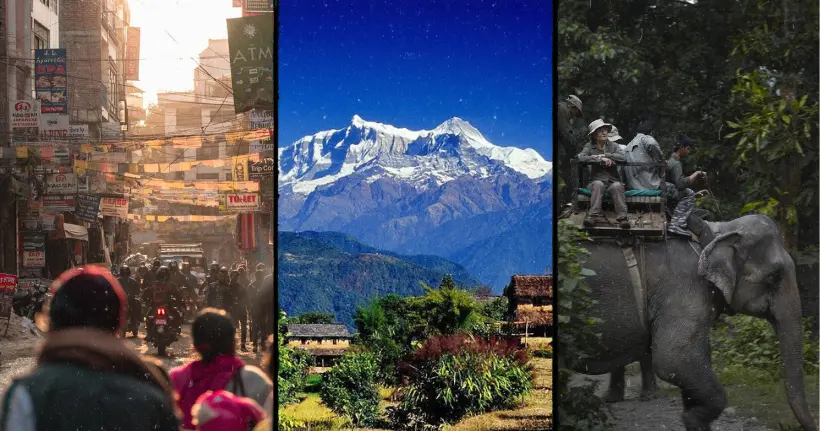
Seven days in Nepal covering three destinations, three distinct landscapes, and three completely different experiences is a structure that works better than it sounds on paper. Kathmandu’s medieval heritage squares, Chitwan’s functioning wildlife ecosystem, and Nagarkot’s Himalayan sunrise viewpoint sit within a compact enough geography that moving between them takes hours rather than days. The result is a trip that covers a genuine range without feeling rushed.
From Ancient Temples to Himalayan Sunrises: Nepal in 7 Days
- 7-day covering Kathmandu Chitwan Nagarkot tour
- Explore UNESCO World Heritage Sites in Kathmandu
- Enjoy jungle safaris and wildlife experiences in Chitwan National Park
- Witness the Himalayan sunrise from Nagarkot viewpoint
- Includes culture, wildlife, mountain views, and local experiences in one trip
- Ideal Nepal tour package for first-time visitors and families
- Best time to visit: October–November and February–April
- Combines heritage sightseeing, nature, and relaxation with manageable travel distances
This is what the itinerary for Kathmandu Chitwan Nagarkot tour actually delivers across each phase.
Kathmandu: Three Days of Heritage That Earns Its Time
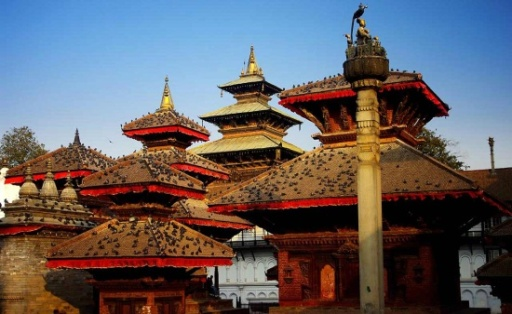
The Kathmandu portion of this itinerary runs three full days, which is the correct amount of time. The city’s heritage circuit is dense enough that a single day produces a surface-level visit to several places and a meaningful experience of none of them. Three days allows the pace to slow down enough that the sites register properly.
The circuit covers:
- Pashupatinath Temple on the Bagmati River, one of the most significant Shiva temples in the world and a UNESCO World Heritage Site, where Hindu cremation rituals happen in plain view on the riverbanks. It is not a comfortable tourist experience in the conventional sense, but it is an honest one.
- Boudhanath Stupa, 36 metres of whitewashed dome ringed by 108 Buddha images and hundreds of prayer wheels, with monks circumambulating continuously and the whole structure draped in prayer flags. Built in the 5th century and is still actively used as a pilgrimage site by Tibetan Buddhist communities.
- Patan Durbar Square, across the river in Lalitpur, is a UNESCO World Heritage Site whose collection of stone temples, medieval courtyards, and carved wooden facades represents some of the finest Newar craftsmanship in the valley.
- Swayambhunath, the Monkey Temple on the hill two kilometres west of the city, where the steep staircase delivers you to a stupa with painted eyes looking out in four directions and monkeys that have clearly decided the hilltop belongs to them.
- Kathmandu Durbar Square, in the heart of the city, the former royal palace complex of the Malla and Shah kings, still functions as a public space surrounded by pagoda temples and carved wooden architecture.
The three days close with an evening walk through Thamel, the tourist district whose narrow lanes manage to be simultaneously chaotic and oddly relaxing once you stop trying to get anywhere in particular and just move with it.
Chitwan: The Haven of Wildlife
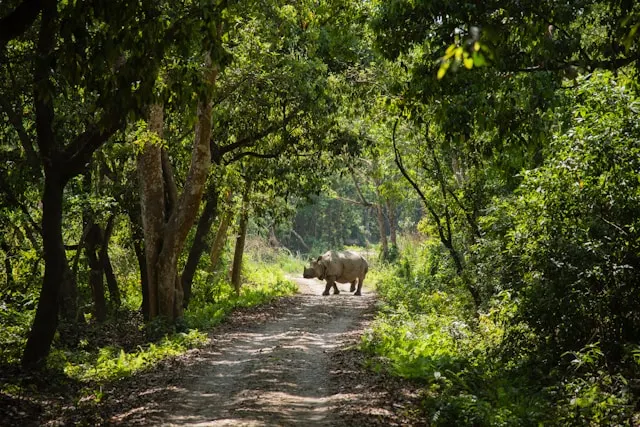
The drive from Kathmandu to Chitwan takes five to six hours and covers 181 kilometres through river gorges, terraced farmland, and the gradual descent from Himalayan foothills into the Terai lowlands. Chitwan National Park is a UNESCO World Heritage Site and one of the better-managed wildlife reserves in Asia, which in practice means the animals are real and present rather than theoretical.
Two days at Chitwan cover:
1. The Canoe Ride
The Rapti River canoe ride is the low-key highlight that most Chitwan itineraries undersell. Wooden boats manned by oarsmen who move quietly through a river system that runs along the park boundary, with Mugger crocodiles and Gharial basking on sandbanks and kingfishers working the shallow edges. The absence of engine noise is what makes it work. You are close enough to the river life that the experience feels participatory rather than observational.
2. The Jeep Safari
The jeep safari runs into the park interior in elevated 4×4 vehicles with clear sightlines across the grassland and into the Sal forest. The one-horned rhinoceros is the signature Chitwan animal and appears regularly in the open grassland sections. Bengal tigers are present in the park, but sightings are not guaranteed, which is what makes the wildlife here genuine rather than staged. The forest also holds sloth bears, monitor lizards, pythons, and 56 species of reptiles and amphibians across the park’s ecosystems.
3. Bird Watching
Chitwan holds species that appear nowhere else in Nepal with the same density. The Bengal florican, paradise flycatcher, sunbirds, and jungle fowl inhabit the forest and grassland edges. For anyone with even a passing interest in birds, Chitwan delivers without requiring specialist effort.
4. Tharu Culture
The first afternoon in Chitwan, visit a local Tharu village and close with a traditional Tharu stick dance performance. The Tharu people are indigenous to the Terai lowlands, and their cultural traditions are specific to this region. The stick dance is an age-old tradition performed at festivals to appease the gods. It is a living practice rather than a tourist recreation.
Nagarkot: The Himalayan Sunrise at the End
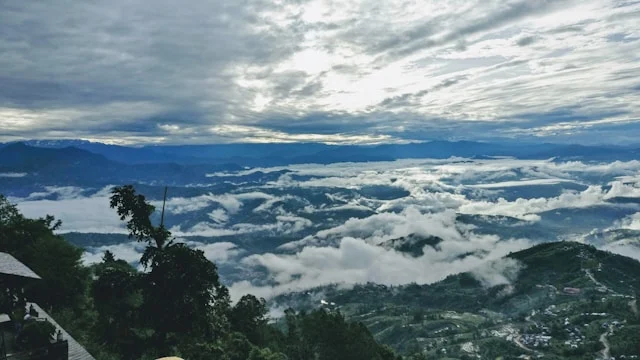
From Chitwan, the route drives back to Kathmandu and then continues to Nagarkot, 30 kilometres east of the capital at 2,175 metres on the rim of the Kathmandu Valley. The transfer takes one to two hours from Kathmandu.
Nagarkot exists primarily for the sunrise. On clear mornings, the panoramic arc from Nagarkot takes in Everest on the far eastern horizon, Annapurna to the west, and Langtang and Ganesh Himal across the northern skyline. The mechanism of the view is straightforward: the elevation places you above the valley floor, and the high snowfields catch the first light before it reaches anything below. The progression of the peaks turning from dark silhouette to pink to gold takes roughly twenty minutes and moves across the arc from east to west.
The evening before the sunrise, the same mountain silhouette catches the last light of the day at sunset, which the itinerary builds in time for subject to conditions.
Visibility at Nagarkot is weather-dependent and season-dependent. The clearest mornings come in October and November after the monsoon has cleared the valley atmosphere. Winter months from December through February are cold before dawn but produce sharp views on clear days. The Kathmandu Chitwan Nagarkot tour itinerary notes that the sunrise and sunset are subject to weather and are accurate and honest. Where cloud cover can close the view entirely, which is the only genuine variable in the Nagarkot experience.
The morning after the sunrise, breakfast at the hotel and transfer to Tribhuvan International Airport marks the end of the seven days.
What the Trip Includes: Kathmandu Chitwan Nagarkot Tour
The practical structure covers accommodation throughout on a MAP basis, meaning breakfast and dinner are included at all hotels. An experienced English-speaking guide accompanies the full itinerary. Porters handle luggage. Private transport runs between all destinations. International airport transfers at arrival and departure are included.
What is not included: Nepal visa fees, personal travel insurance, cultural site entrance fees across Kathmandu, Chitwan, and Nagarkot, and personal beverages. The entrance fees to the UNESCO World Heritage Sites, Chitwan National Park, and the Nagarkot viewpoint add up across seven days and are worth factoring into the overall trip budget.
Full itinerary details and booking information for the Kathmandu Chitwan Nagarkot Tour are available at Adventure World Trails and Travels.
Kathmandu Chitwan Nagarkot Nepal Tour: Why This Route Works
The sequencing of the three destinations matters more than it might appear.
Starting in Kathmandu gives the trip a cultural and historical foundation before it moves into landscape and wildlife territory. Two full days in the heritage circuit produce a meaningful engagement with Nepali history and religious tradition that contextualises everything that follows.
Moving to Chitwan as the middle section shifts the register completely. After the stone temples and carved facades of Kathmandu, two days in a functioning jungle ecosystem reset the experience in a way that arriving in Nepal and going directly to Chitwan does not.
Ending at Nagarkot is the correct conclusion. The sunrise over the Himalayan views, after five days of city heritage and jungle wildlife, produces a final image of Nepal that is different from anything the previous days offered and that the Kathmandu Valley cities cannot provide from their lower elevations.
Seven days, three complete experiences, one complete trip. Contact Us for more exciting tours and adventure activites in Nepal.
FAQs on Kathmandu Chitwan Nagarkot Tour
1. Is seven days enough time for Kathmandu, Chitwan, and Nagarkot?
Seven days covers the essential experience of all three destinations without compression, which makes any of them feel rushed. Kathmandu gets three days, including the major heritage circuit and a Thamel evening. Chitwan gets two full days of wildlife activities. Nagarkot gets the sunset arrival and the sunrise morning. If additional time is available, extending the Chitwan portion by a day adds depth to the wildlife experience without diminishing the other destinations.
2. What is the best time of year for this itinerary?
October through November produces the best conditions across all three destinations simultaneously. Post-monsoon air clarity gives Nagarkot its sharpest Himalayan views, Chitwan’s wildlife is active, and the undergrowth has thinned enough to improve sightlines in the park, and Kathmandu’s heritage sites are accessible without the heat or rain of the monsoon months. February through April is the second-best window.
3. How difficult is the drive between destinations?
All three drives use private transport on sealed roads. Kathmandu to Chitwan is five to six hours along the Prithvi Highway through river gorges and the Terai lowlands. Chitwan back to Kathmandu retraces the same route. Kathmandu to Nagarkot is one to two hours on a hill road. None of the drives requires physical exertion beyond sitting in a vehicle, though the Prithvi Highway has sections of winding road that some passengers find tiring.
4. What wildlife is actually likely to be seen at Chitwan?
One-horned rhinoceroses are spotted regularly in the open grassland sections during jeep safaris and are the most reliably encountered large animal in the park. Mugger crocodiles and Gharial are consistently present on the Rapti River during canoe rides. Bird species, including kingfishers, storks, and jungle fowl, appear throughout both activities. Sloth bears, monitor lizards, and pythons are present and sighted with reasonable frequency. Bengal tiger sightings occur but are not guaranteed, which is what makes the wildlife here authentic.
5. How do I book the Kathmandu, Chitwan, and Nagarkot tour with Adventure World Travel?
Contact Adventure World Travel directly through adventureworldtravels.com to discuss available departure dates, group arrangements, and any itinerary adjustments. The tour runs as a private arrangement rather than a fixed group departure, which allows the schedule to be modified around your specific travel dates. The team handles all logistics, including permits, accommodation, transport, and guide assignment from a single point of contact.