
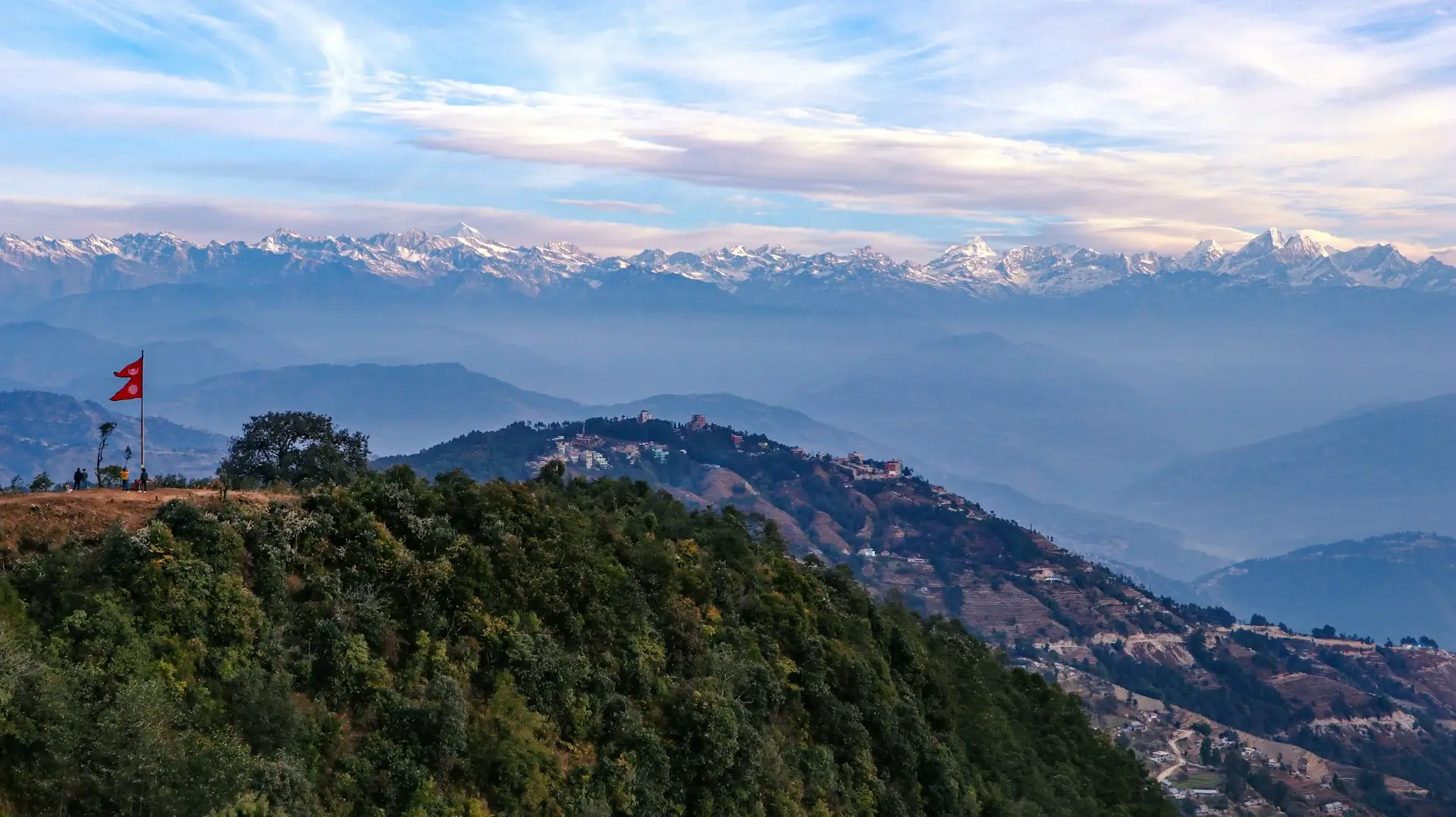
Nagarkot is 32 kilometres east of Kathmandu at 2,195 metres, accessible in roughly an hour and a half by road, and on clear mornings it offers one of the most expansive Himalayan panoramas available from any point within day-trip distance of the capital. The view on those mornings takes in a 200-kilometre arc of peaks from Dhaulagiri in the west to Kanchenjunga in the east, with Everest visible on the far eastern horizon and the Annapurna, Manaslu, Langtang, and Jugal ranges filling the middle distance.
Is the Himalayan Sunrise from Nagarkot Worth It?
Yes, but only if you plan it right. Nagarkot offers a breathtaking, 200-kilometer panoramic view of eight of Nepal’s ten highest peaks including Mount Everest. To guarantee the best experience, stay overnight rather than taking a grueling 4:00 AM day trip from Kathmandu, and visit during the peak clear months of October to November or February to April.
Whether it is worth it depends entirely on conditions, expectations, and how the trip is structured. Get those three things right and Nagarkot delivers something that stays with you. Get them wrong and you drive an hour and a half in the dark to watch the clouds.
What You’ll Actually See From Nagarkot
- Elevated Vantage Point: Positioned at 2,195 metres above the Kathmandu Valley rim, Nagarkot offers a superior perspective that remains unmatched by any viewpoint within the city.
- Expansive 200-Kilometre Arc: On clear days, the horizon showcases eight of Nepal’s ten highest peaks, providing a high-scale panoramic experience.
- Major Peak Identification:
- Manaslu (8,163m): Located approximately 95 kilometres to the northwest.
- Ganesh Himal & Langtang Range: Serve as the primary view for the northern skyline.
- Mount Everest (8,849m): Visible as a distinct white triangle on the far eastern horizon, roughly 145 kilometres away.
- The Sunrise Phenomenon: The visual spectacle is defined by the “first light” effect, where high-altitude snowfields capture sunlight while the lower valleys remain in the shadows.
- The Change of Color: The transition from grey to pink to gold unfolds over a 20-minute progression. This movement across the range makes the sunrise a dynamic event.
- Experience: The sequence of light hitting different peaks based on their orientation creates an immersive experience that is more impactful than capturing a single still image.
Best Time to Visit Nagarkot: Weather, Seasons, and Visibility Secrets
The view is weather-dependent in a way that matters practically. The conditions at Nagarkot vary enough by season that timing determines more than any other factor whether the experience delivers.
Peak Season: The Clear Skies (October – November)
October and November combine post-monsoon clarity with comfortable temperatures at altitude. The air is at its cleanest after months of monsoon rain have washed the valley atmosphere, and the Himalayan panorama from Nagarkot reaches its sharpest definition during these weeks. Pre-dawn temperatures in October sit around 8 to 12 degrees Celsius, cold enough to require a jacket but not uncomfortable. November produces the most consistently clean air of any month, which is one reason it is the most popular month for both trekking and viewpoint visits across Nepal.
Spring Clarity: Pre-Monsoon Season (February – April)
Late February through April offers the second-best visibility window. The days lengthen, temperatures rise, and the Himalayan views return to reliable clarity after the cold of winter. The caveat is haze. Dust accumulates in the Kathmandu Valley atmosphere during the dry spring months, and March and April in particular can reduce the sharpness of distant peaks even on days without cloud cover. The views are good during this window. They are rarely as sharp as November.
Winter Landscapes: Crisp and Cold (December – February)
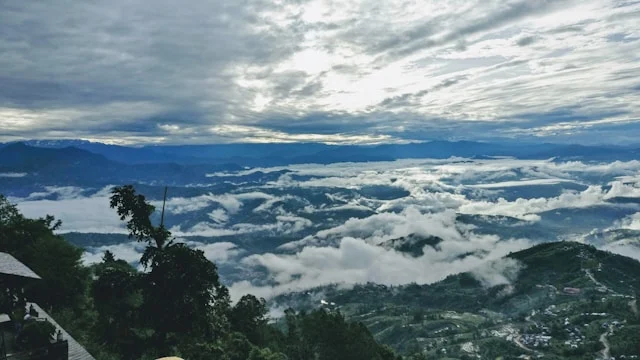
December through February brings colder conditions and occasional snowfall at Nagarkot itself. The air on clear days is sharp and the views well-defined, sometimes enhanced by low-lying valley fog that sits below the viewpoint without reaching it, producing a sea of white beneath the floating peaks. Pre-dawn temperatures can drop to near freezing, so warm layers are a practical requirement rather than a precaution. The trade-off is that cold fronts bring cloud cover that can close the view for several days at a time.
Monsoon Challenges (June – September)
The monsoon brings heavy cloud cover that blocks the peaks on most mornings. Rain, mist, and low cloud cover the range on the majority of days and the chances of a clear sunrise view are low. The landscape is vivid and green and the valley itself is atmospheric, but the Himalayan panorama that defines the Nagarkot experience is frequently absent. Visiting Nagarkot during the monsoon for the sunrise is possible but unreliable, and the season is not recommended if the mountain view is the primary objective.
Overnight Stay vs. Day Trip: Why Waking Up in Nagarkot Changes Everything
The overnight stay changes the experience substantially, and for a sunrise visit, it is the correct approach. A day trip from Kathmandu that attempts to reach Nagarkot before dawn requires leaving the city at 4:00 am or earlier, driving an hour and a half on mountain roads in darkness, and arriving at the viewpoint cold, tired, and with no guarantee of conditions after the effort. If the morning is cloudy, the return drive to Kathmandu follows immediately without any compensation for the early start.
Staying overnight at Nagarkot inverts this. Arriving the afternoon before gives the visit the actual Nagarkot experience: the late afternoon light on the peaks, dinner with a mountain backdrop, the quiet of the hillside after Kathmandu, and the sunrise from a position of rest rather than a pre-dawn road trip. If the morning is cloudy, the disappointment is manageable and the overnight stay retains its value through the setting and the evening. If the morning is clear, you are exactly where you need to be with no logistics to manage.
The viewpoints at Nagarkot range from the free public areas near the tower to specific vantage points accessible from individual properties. A good hotel at Nagarkot is positioned for the view rather than simply being located in the general area. The difference between a room facing the Himalayan panorama and one facing the valley interior is the difference between waking up to the full view and walking a distance in the cold to reach a shared viewpoint.
Epic Side Quests: Hiking the Nagarkot to Changu Narayan Trail
Nagarkot is sometimes treated as a single-purpose destination, visited for the sunrise and left immediately after. The village and its surroundings warrant more time than this.
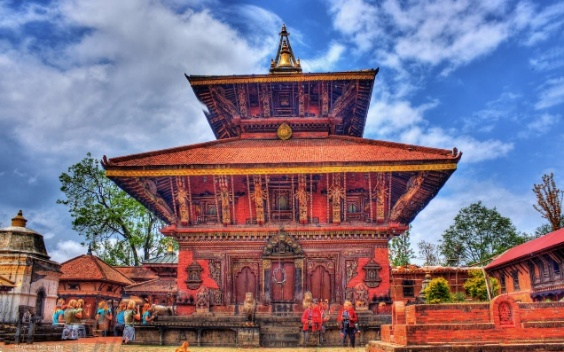
The short hike from Nagarkot to Changu Narayan Temple covers roughly 12 kilometres of ridge trail through pine forest and terraced farmland, descending to one of Nepal’s oldest temples, a UNESCO World Heritage Site notable for its 5th-century stone carvings and multi-tiered pagoda architecture. The walk takes three to four hours and deposits you at Changu Narayan from where transport back to Kathmandu or Bhaktapur is straightforward. It is one of the better half-day walks accessible from the Kathmandu Valley without requiring a full trekking commitment.
The village itself is small and quiet by Kathmandu standards. The local food at Nagarkot, dal bhat with fresh vegetables from the surrounding farms, eaten on a terrace with the peaks in the background, is a simple pleasure that the setting amplifies considerably.
Nagarkot as Part of a Kathmandu Valley Itinerary
Nagarkot fits most naturally into a Kathmandu Valley itinerary as a one to two night extension that provides contrast to the city’s density and pace. After two or three days in Kathmandu covering the major heritage sites, the shift to Nagarkot’s elevation and quiet is a reset that makes the remaining city time more productive.
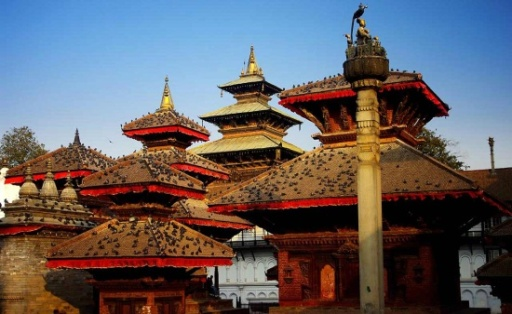
The combination of Nagarkot with Bhaktapur works particularly well. Bhaktapur Durbar Square, 15 kilometres from Kathmandu on the road toward Nagarkot, is the most complete and best-preserved of the three valley Durbar Squares and deserves a half-day minimum. Building Bhaktapur into the route between Kathmandu and Nagarkot rather than treating it as a separate trip makes the itinerary more efficient and adds substance to what would otherwise be a straightforward drive.
Adventure World Travel includes Nagarkot in several Kathmandu Valley itineraries, with overnight stays positioned to capture the sunrise and the half-day Changu Narayan walk built into the programme for those who want the full experience rather than the viewpoint alone. The Kathmandu-Nagarkot package is detailed at adventureworldtravels.com/destination/kathmandu-nagarkot.
Is It Worth It? The Answer to the Question
On a clear morning in October or November, watching the 200-kilometre Himalayan arc catch the first light of day from 2,195 metres above the Kathmandu Valley is an experience that justifies the effort without qualification. There are few accessible viewpoints anywhere in the Himalayan region that offer view from a position that requires no trekking preparation, no altitude acclimatization, and no more than one overnight stay from one of Asia’s most visited cities.
The main concern is conditions. Nagarkot without a clear morning is a pleasant hill station with limited Himalayan views. Getting the full experience depends on season, timing, and the particular morning’s weather, none of which can be guaranteed. What can be controlled is the timing of the visit within the clearest seasons, the decision to stay overnight rather than attempting a pre-dawn drive, and the selection of accommodation positioned for the view.
Get those decisions right and the answer to the question is yes, without hesitation.
FAQs
1. What is the best time of year to visit Nagarkot for the Himalayan sunrise?
October and November produce the most consistently clear conditions, combining post-monsoon air quality with comfortable temperatures. Late February through April is the second-best window, though spring haze can reduce clarity of distant peaks like Everest. December and January offer sharp views on clear mornings but require warm clothing for pre-dawn temperatures near freezing. The monsoon months of June through September bring frequent cloud cover that blocks the peaks on most mornings and are not recommended for a sunrise-focused visit.
2. Can you see Mount Everest from Nagarkot?
Yes, on clear days. Everest sits approximately 145 kilometres to the east and appears on the far eastern horizon of the panoramic arc visible from Nagarkot’s higher viewpoints. It is not the dominant peak in the view from this angle, but it is identifiable as the highest point on the eastern horizon. Binoculars improve the Everest identification considerably. October and November post-monsoon clarity produces the sharpest views of the distant eastern peaks.
3. Is it better to stay overnight at Nagarkot or do a day trip from Kathmandu?
Overnight is the correct approach for a sunrise visit. A pre-dawn day trip from Kathmandu requires leaving the city at 4:00 am or earlier, arriving at the viewpoint cold and without rest, and returning immediately if conditions are poor. Staying overnight places you at the viewpoint without logistics, allows the full Nagarkot experience including the afternoon and evening views, and makes a cloudy morning manageable rather than a wasted early start.
4. How do you get from Kathmandu to Nagarkot?
Nagarkot is 32 kilometres east of Kathmandu, accessible by road in approximately one and a half hours depending on traffic and road conditions. Private vehicle hire through a tour operator is the most convenient option and allows flexibility over departure time, stops at Bhaktapur en route, and return timing. Adventure World Travel arranges private transport as part of the Kathmandu-Nagarkot package, including the option to combine the visit with a Bhaktapur stop on the way up and the Changu Narayan walk on the way back.
5. What should I bring for the Nagarkot sunrise?
Warm layers are the primary requirement. Pre-dawn temperatures at 2,195 metres range from near freezing in winter to 8 to 12 degrees Celsius in October. A jacket, fleece, and warm hat are necessary regardless of how warm the Kathmandu day was before you arrived. Binoculars improve peak identification across the full panoramic arc, particularly for distant peaks like Everest and Kanchenjunga on the eastern horizon. A camera with manual settings benefits from the low-light pre-dawn conditions. Comfortable footwear for the short walk to the viewpoint from accommodation completes the practical list.
6. How far is Nagarkot from Kathmandu and how do I get there?
Nagarkot is 32 kilometers east of Kathmandu. By private car or taxi, it takes roughly 1.5 hours. While local buses are available, hiring a private vehicle through an operator offers the flexibility needed to stop at Bhaktapur along the way.