
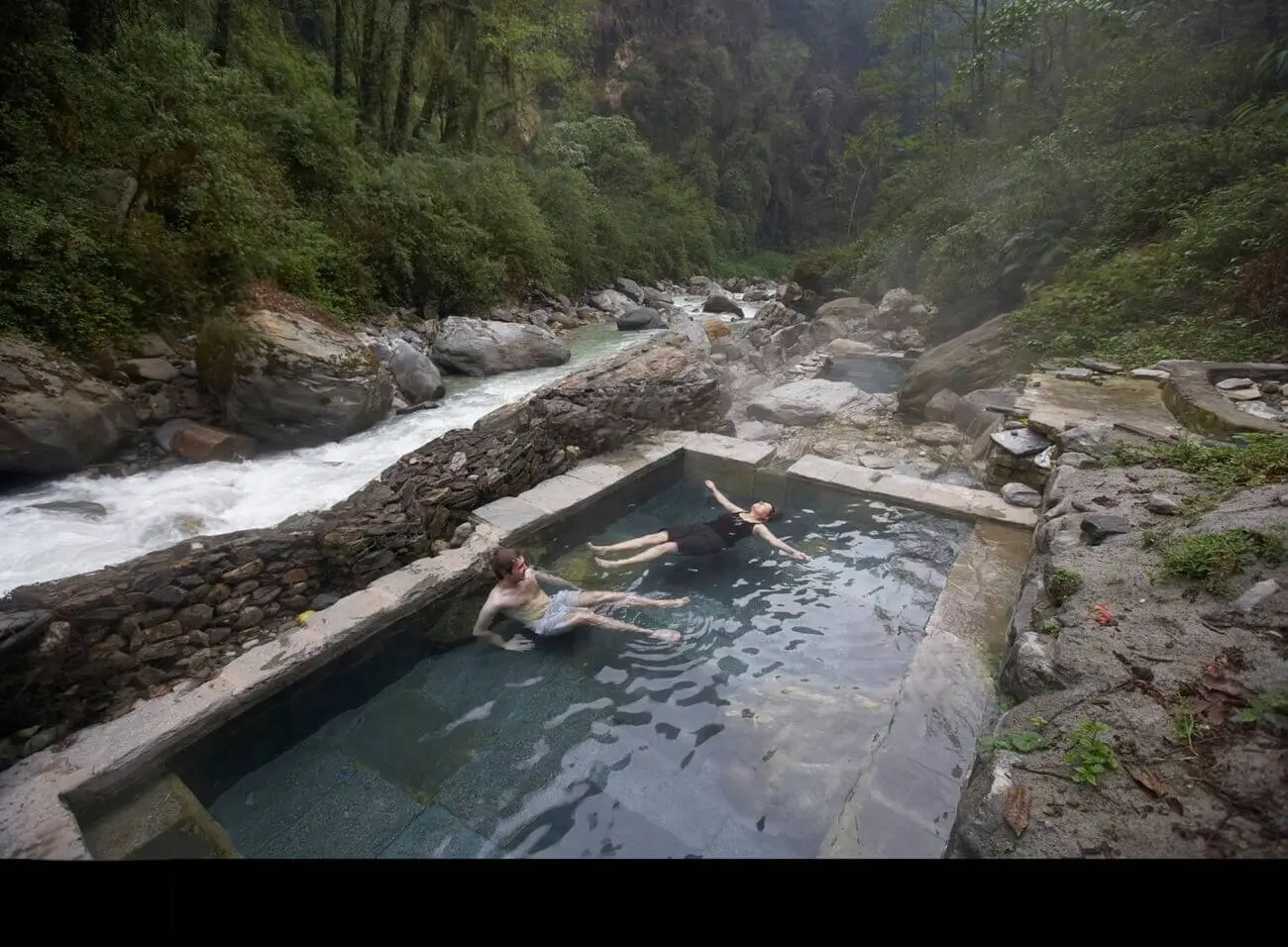
You have spent two weeks at altitude. The trail from Jomsom to Lo Manthang and back has put several thousand metres of elevation change through your legs. The cold nights at Muktinath, the wind through the Kali Gandaki corridor, the long days between villages in the upper plateau. By the time the route descends back through the forested lower valley toward the southern end of the gorge, your body has earned what comes next.
Tatopani sits at 1,190 metres on the bank of the Kali Gandaki river, where natural Tatopani hot springs emerge from the ground at temperatures that have drawn tired trekkers and Hindu pilgrims for generations. As a final stop before the drive back to Pokhara, it delivers something the rest of the Upper Mustang journey does not: warmth, stillness, and the particular satisfaction of soaking in geothermally heated water with mountains visible above the treeline.
What is Tatopani?
The name says it directly. Tato means hot and pani means water in Nepali. The village of Tatopani in the Myagdi district sits at the confluence of the Kali Gandaki and Myagdi rivers, where geothermal activity brings naturally hot water to the surface in pools that have been developed into bathing facilities over the decades.
Key Facts About Tatopani
- Elevation: 1,190 metres above sea level
- Location: Myagdi district, Gandaki Province
- River confluences: Kali Gandaki and Myagdi rivers meet here
- Hot spring temperature: approximately 45 to 65 degrees Celsius at source
- Distance from Pokhara: approximately 140 kilometres by road
- Drive time from Pokhara: 5 to 7 hours depending on road conditions
- Nearest major trekking hub: Ghasa to the north, Beni to the south
The hot springs in Tatopani are believed to have therapeutic properties and draw not just trekkers finishing long routes but pilgrims and local visitors who come specifically for the bathing experience. The water contains dissolved minerals including sulphur and calcium, which are associated with skin and muscle benefits in traditional practice.
The Tatopani Hot Springs: What to Expect
The main bathing pools at Tatopani have been developed with concrete infrastructure around the natural spring outlets. Multiple pools of varying temperature allow bathers to choose their comfort level, with the hottest pools closest to the spring source and cooler pools further along.
What the Experience Looks Like
- Changing facilities are available adjacent to the pools
- Multiple pools at different temperatures from comfortably warm to very hot
- The pools are communal and shared with local bathers and other trekkers
- Opening hours are typically early morning through evening
- A small entry fee applies
- Towel hire is usually available from guesthouses nearby
- The riverside setting means the sound of the Kali Gandaki accompanies the soak
The best time to visit the pools is early morning before they fill with other visitors, or in the evening when the cooler air temperature makes the contrast with the hot water particularly satisfying. Midday visits during peak season can be crowded, particularly when multiple trekking groups arrive on the same schedule.
Why Tatopani Hot Spring Works as an End Point
The physical logic of ending an Upper Mustang journey at Tatopani is sound. The body’s response to two weeks of high-altitude trekking includes muscle fatigue, joint stress from repeated descent on uneven terrain, and the accumulated dryness of the rain shadow climate. The hot springs address the physical side of that in a way that a night in a standard guesthouse does not.
Physical Benefits of a Hot Spring Soak After Trekking
- Heat penetrates deep muscle tissue, accelerating the release of lactic acid accumulated through extended exertion
- Warm water immersion reduces joint inflammation that builds through repeated altitude gain and descent
- The buoyancy of water reduces the load-bearing stress that legs have been carrying for two weeks
- Skin hydration improves after days in the dry, high-altitude Mustang climate
- The parasympathetic nervous system response to warm immersion reduces the cortisol load of an intense physical journey
Beyond the physical, Tatopani provides a decompression point between the austerity of the high plateau and the sensory reintegration of returning to Pokhara and Kathmandu. The descent through the Kali Gandaki valley from the dry Mustang landscape into the subtropical green of the lower gorge is one of the most dramatic environmental transitions in Nepal. Tatopani sits at the bottom of that transition, where the altitude has dropped, the trees have returned, and the air is thick and warm.
The Village of Tatopani Hot Springs
Tatopani is a small village with enough tourist infrastructure to support the steady flow of trekkers passing through on the Annapurna Circuit and the Mustang routes. It is not a destination in itself for most travellers but it rewards a day of exploration beyond the pools.
What to See and Do in Tatopani Village
- Walk along the Kali Gandaki riverbank to watch the river after its journey through the world’s deepest gorge
- Visit the local market where fresh vegetables, fruit, and local produce from the valley farms are available
- Observe the Baraha Chhetra temple, a small religious site near the confluence that draws Hindu pilgrims
- Watch rafting groups launch from the riverside, as Tatopani is a departure point for Kali Gandaki rafting expeditions
- Eat a proper meal with fresh ingredients from the lower valley after weeks of teahouse food at altitude
The guesthouse and restaurant quality at Tatopani is notably better than at most stops through Upper Mustang. The lower altitude means fresh produce can be sourced locally and the connection to the road network gives the village access to a wider range of ingredients than the high valley supports. A meal here with fresh vegetables and local protein after the teahouse circuit above is its own form of recovery.
Tips for New Travellers Visiting Tatopani
Planning the Visit
- Build Tatopani into your Upper Mustang itinerary as a dedicated overnight stop rather than a passing lunch break. A single afternoon at the springs followed by a morning soak before the drive to Pokhara is the most satisfying approach.
- Arrive in Tatopani in the afternoon to allow the full evening at the springs. The drive or walk from Ghasa to Tatopani takes several hours depending on the route and pace.
- Book guesthouse accommodation in advance during the October and April peak periods when the Annapurna Circuit and Mustang routes are at their busiest and accommodation in the village fills.
At the Hot Springs
- Start with the cooler pools and work toward the hotter pools as your body adjusts rather than entering the hottest pool immediately
- Limit individual soaks to 15 to 20 minutes before cooling down, particularly at the higher temperature pools where overheating is a genuine risk
- Drink water before and after soaking. Two weeks at altitude and in the dry Mustang climate means dehydration is already a factor, and hot spring immersion increases fluid loss
- Do not enter the pools with open wounds, sunburn, or skin conditions that hot mineral water may aggravate
- Respect the communal nature of the pools. The facility is shared with local bathers and other trekkers and basic pool etiquette applies
Practical Logistics
- Cash is required for the entry fee and most guesthouse payments in Tatopani. The village does not have ATM access
- The drive from Tatopani to Pokhara takes 5 to 7 hours and runs along the Kali Gandaki road through Beni. The road condition varies seasonally and the journey is longer after rainfall
- Tatopani is also accessible by foot from the north via the Annapurna Circuit trail for trekkers who want to walk the full descent from the Mustang region rather than taking the jeep road
Packing for Tatopani
- Bring a swimsuit or lightweight shorts. The springs are communal and full clothing is not standard
- A quick-dry towel is useful if you do not want to rely on guesthouse hire
- Flip flops for the pool area keep feet comfortable on the concrete surrounds
- Light layers for the evening as Tatopani’s altitude of 1,190 metres means evenings are comfortable rather than warm
Combining Tatopani with Other Trips
1. Upper Mustang Trek Completion
The standard Upper Mustang return route from Lo Manthang descends through Ghami, Chele, Kagbeni, Jomsom, Marpha, Tukuche, Kalopani, and Ghasa before reaching Tatopani. An overnight at Tatopani after the full route completion before the Pokhara drive makes the transition from trekking to city travel feel properly concluded rather than abrupt.
2. Lower Mustang Tour
Tatopani as a specific overnight stop on the return leg from Muktinath is a solid choice as well. Travellers on this trip have the hot springs experience as a planned highlight rather than an optional addition.
3. Annapurna Circuit Extension
Tatopani sits on the classic Annapurna Circuit route and can be combined with a Lower or Upper Mustang trips for travellers who want to continue south from Tatopani through the circuit’s lower section rather than returning by road.
Getting To Tatopani
1. From the North (Mustang Route)
Descend from Ghasa by foot or jeep along the Kali Gandaki road. The journey from Ghasa to Tatopani takes approximately 2 to 3 hours by jeep on the current road.
2. From the South (Pokhara)
Drive from Pokhara via Beni along the Kali Gandaki road. Total journey time of 5 to 7 hours depending on road conditions and stops.
3. From Jomsom
By jeep the journey from Jomsom to Tatopani takes approximately 4 to 5 hours with stops through Marpha, Tukuche, Kalopani, and Ghasa. By foot the journey runs 3 to 4 days on the classic Annapurna Circuit trail
FAQs on Tatopani Hot Spring Tour in Nepal
1. Are the Tatopani hot springs safe to use?
Yes, with standard precautions. Limit soaks to 15 to 20 minutes, drink water before and after, and start with cooler pools before moving to hotter ones. Avoid the pools if you have open wounds, significant sunburn, or heart conditions that hot water immersion may affect. The pools are communal and maintained by the local community.
2. How long should I spend at Tatopani?
One overnight stay with an evening soak and a morning soak before departure is the standard approach for trekkers finishing the Mustang routes. Travellers who want more recovery time can spend two nights without running out of things to do, particularly if the drive to Pokhara is split with a stop at Beni.
3. Is Tatopani accessible year-round?
Generally yes, though the road through the Kali Gandaki gorge can be affected by landslides during the monsoon season from June to September. During peak monsoon, the drive from Pokhara to Tatopani may be disrupted. The springs themselves operate year-round and are particularly appealing in the cooler months when the temperature contrast between the air and the water is most pronounced.
4 Do I need to book accommodation in Tatopani in advance?
During April and October peak trekking seasons, advance booking is advisable as the village receives significant foot traffic from both the Annapurna Circuit and Mustang routes simultaneously. Outside peak season, same-day accommodation is generally available. Adventure World Travel handles accommodation booking as part of the itinerary planning process.
5. Can I visit Tatopani without doing the full Upper Mustang trek?
Yes. Tatopani is accessible as a standalone destination from Pokhara by road in a day trip or overnight excursion. It also features on the Lower Mustang tour itinerary and the Annapurna Circuit without requiring the full Upper Mustang permit and fourteen-day commitment. The springs experience is the same regardless of the route taken to reach it.