Location
Duration
Activities
Accomodation
Meals
Group Size
Best Time
Day 01 |
Arrival in Kathmandu.
Once you arrive in Tribhuvan International Airport, you will be warmly greeted and welcomed with“Khada” by our representative who will assist and transfer you towards your hotel. After check-In, all necessary travel documents will be handed over to you along with a short briefing on your tour.
Overnight stay at a hotel in Kathmandu.
Meals: Breakfast
Day 02 |
Optional Activities:
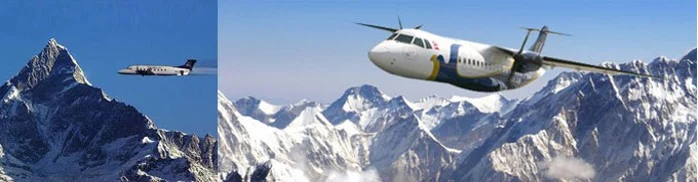
Optional Activities: Scenic Mountain flight
Embark on an extraordinary aerial adventure with our Mountain Flight over the Himalayas, a journey that promises awe-inspiring views of the world’s most majestic peaks. This thrilling experience takes you above the towering summits of the Himalayan range, providing a unique and unparalleled perspective of their grandeur. As you board the aircraft, anticipation builds for the breathtaking vistas that await. The surreal landscape unfolds below, revealing glaciers, deep valleys, and pristine mountain lakes. Whether you’re a mountaineer, nature enthusiast, or simply seeking a once-in-a-lifetime experience, our Mountain Flight over the Himalayas ensures an unforgettable journey into the heart of this awe-inspiring mountain range.
Sightseeing of Swayambhunath Stupa
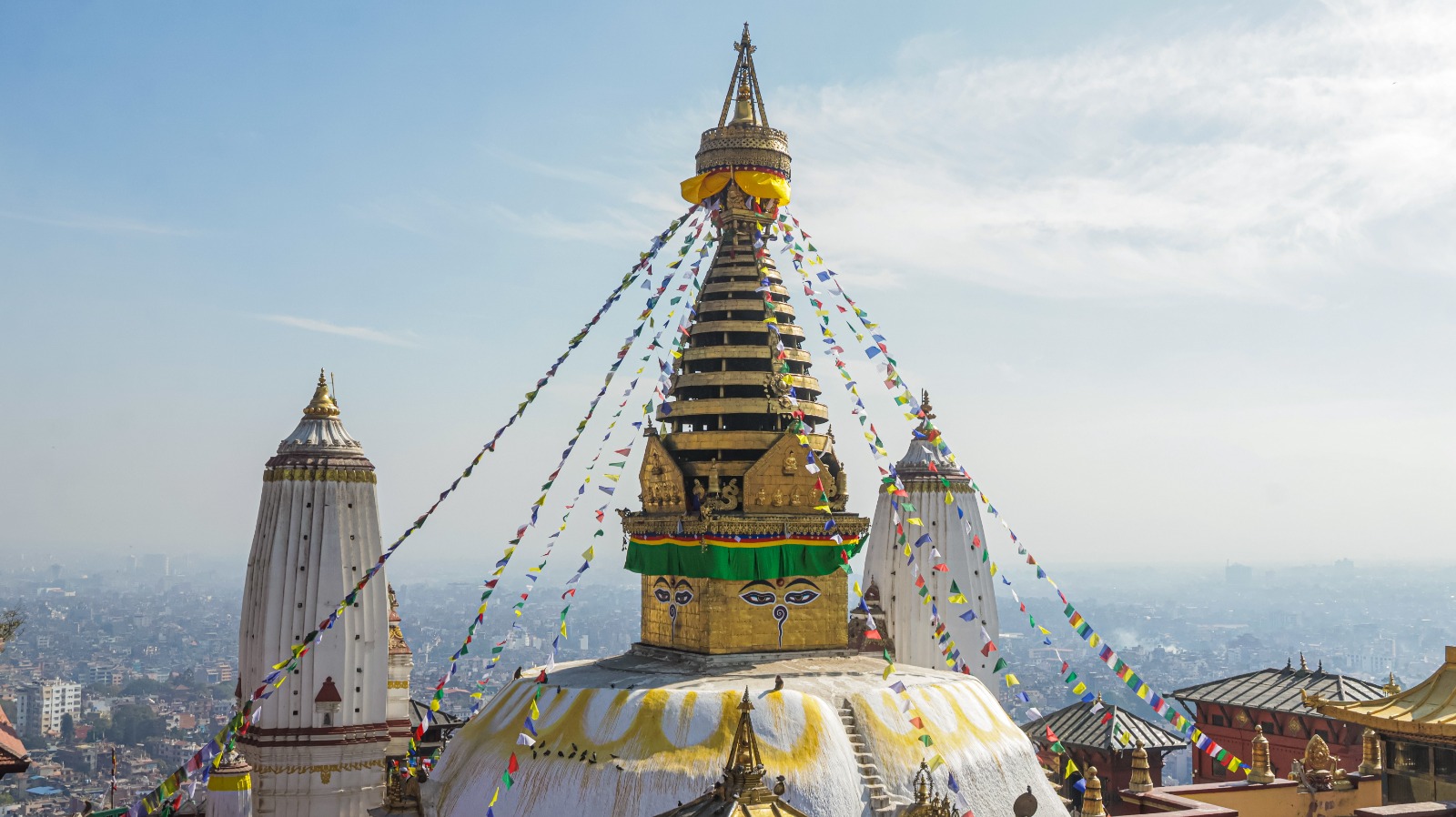
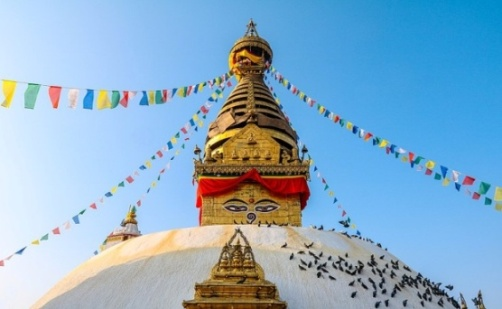
After breakfast at the hotel, you will begin your sightseeing tour of Kathmandu by visiting the iconic Swayambhunath Stupa, affectionately known as the Monkey Temple due to the resident population of monkeys that add charm to the site. Perched atop a hill overlooking the Kathmandu Valley, this ancient stupa is one of Nepal’s most revered Buddhist shrines, dating back over 2,000 years. Walk through the prayer wheels, admire the magnificent central stupa surrounded by intricately carved smaller stupas, and enjoy sweeping views of the valley and the distant Himalayan ranges.
Kathmandu Durbar Square Visit
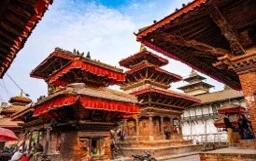
Following this, you will delve into the historical treasures of Kathmandu Durbar Square, including Hanuman Dhoka, Parvati and Mahadev temple, Kumari Palace, Taleju temple, and more. Kathmandu Durbar Square, situated in the heart of Kathmandu, is a UNESCO World Heritage Site renowned for its stunning architecture, palaces, temples, and courtyards. It was once the royal palace of the Malla and Shah kings of Nepal. The square is a bustling hub of activity, with locals and tourists alike wandering amidst the intricately carved wooden buildings, ancient temples, and statues. It’s a vibrant showcase of Nepalese art, culture, and history.
Patan Durbar Square Visit
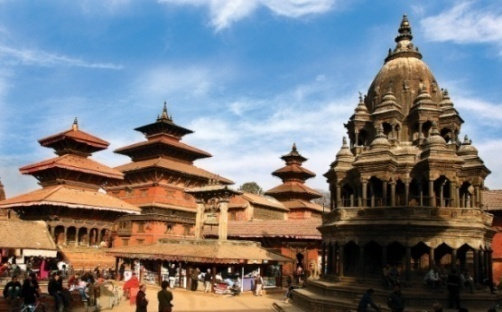
Lastly, visit Patan Durbar Square, located in the city of Patan (also known as Lalitpur), is another UNESCO World Heritage Site in the Kathmandu Valley. It features a rich collection of temples, palaces, statues, and courtyards dating back to the medieval period. The square is renowned for its fine Newari architecture, with intricately carved wooden windows, doors, and struts adorning many of the buildings.
Overnight stay at a hotel in Kathmandu.
Meals: Breakfast
Day 03 |
Sightseeing of Pashupatinath Temple, Boudhanath Stupa & Bhaktapur Durbar Square.
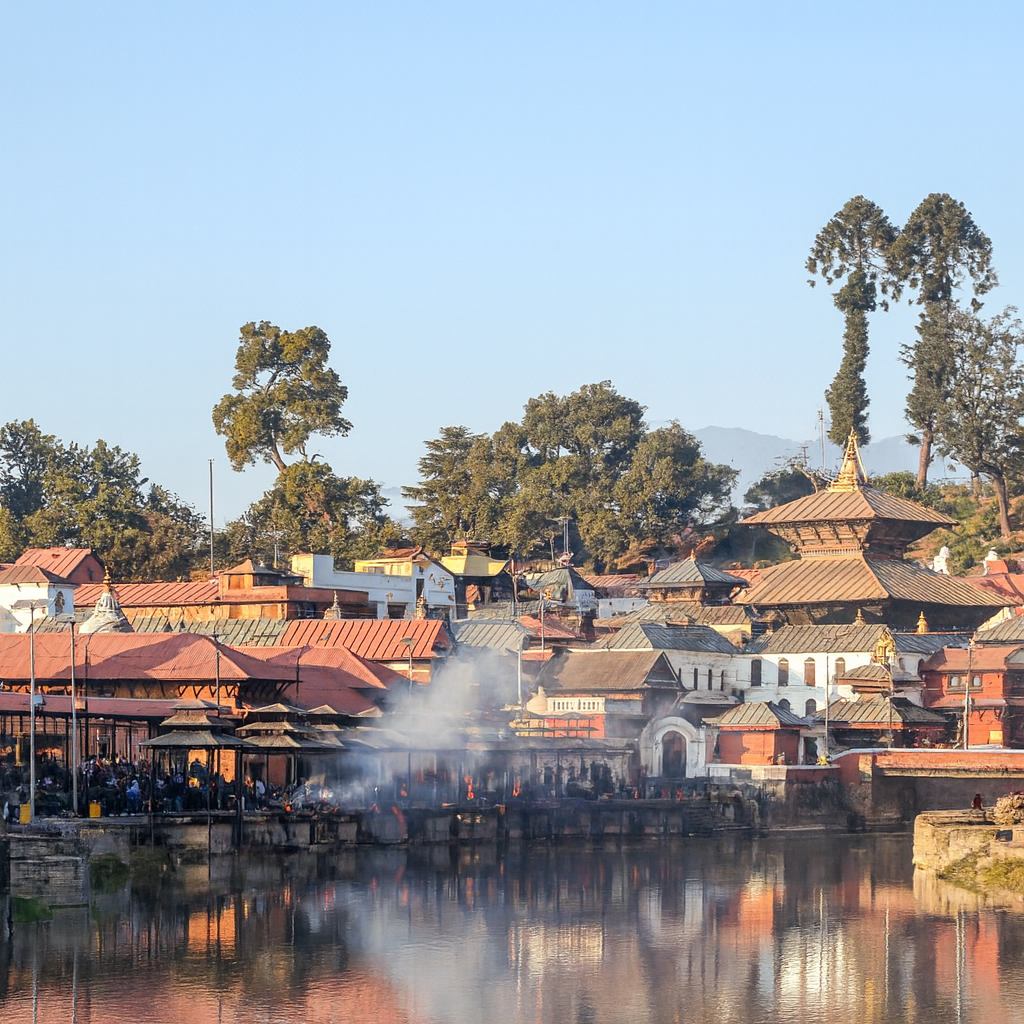
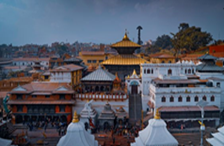
After breakfast you will visit Pashupatinath Temple, with its astonishing architectural beauty, stands as a symbol of faith, religion, culture and tradition. Pashupatinath is regarded as one of the most sacred temples of Hindu Lord Shiva in the world and its existence dates back to 400 A.D. The richly-ornamented pagoda houses the sacred linga or phallic symbol of Lord Shiva. Thousands of pilgrims from all over the world come to pay homage to this temple that is also known as ‘The Temple of Living Beings’. Only the Hindus are allowed to go inside the temple.
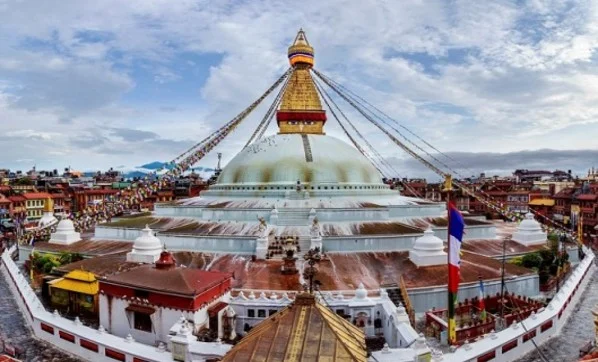
Next you will visit, Boudhanath Stupa, the largest stupa in the Valley and one of the largest in the world. It looms 36 meters high and presents one of the most fascinating specimens of stupa design with hundreds of prayer wheels and 108 small images of Buddha all around. The stupa has four sides with the watchful eyes of Lord Buddha. All the Buddhists throng to this stupa to take part in the sacred rituals during the Buddhist festivals.
At last, you will drive to Bhaktapur, an ancient city renowned for its well-preserved medieval architecture, temples, and courtyards. Wander through the narrow alleys of Bhaktapur Durbar Square, admiring the intricately carved wooden structures and traditionalNewari craftsmanship. It is an open museum holding exciting palaces, courtyards, royal baths, sculptures, pagodas, Shikhara style temples and Buddhist monastery along with exclusive architecture. In other words, this is the most beautiful Durbar you visit in your Nepal tours.
Overnight stay at a hotel in Kathmandu.
Meals: Breakfast
Day 04 |
Final Departure
After breakfast, our representative from Kathmandu will transfer you to the airport for your onward flight. We hope you had a wonderful time in Nepal and look forward to seeing you again.
Meal: Breakfast
[Note: This program is given as an indication according to the indications known to date. It may be subject to changes on site due to local data. These changes will always be made in the best possible way, in the spirit of the original program.]
**END OF TOUR**
***HAPPY JOURNEY***
| CITIES | NIGHTS | PLAN | HOTEL – 3 Star | HOTEL – 4 Star | HOTEL – 5 Star |
|---|---|---|---|---|---|
| Kathmandu | 03 N | BB | Hotel Tibet Lazimpat | The Malla Hotel | Dusit Princess Kathmandu |
| Cost Based on 02 Pax | USD 244/- Per person | USD 276/- Per person | USD 327/- Per person | ||
| Cost Based on 03 Pax | USD 252/- Per person | USD 284/- Per person | USD 335/- Per person | ||
| Cost Based on 04 Pax | USD 236/- Per person | USD 267/- Per person | USD 319/- Per person | ||
| Cost Based on (05 – 09) Pax | USD 220/- Per person | USD 252/- Per person | USD 303/- Per person | ||
| Cost Based on (10 – 14) Pax | USD 206/- Per person | USD 238/- Per person | USD 289/- Per person | ||
| Cost Based on (15 – 19) Pax | USD 199/- Per person | USD 231/- Per person | USD 285/- Per person | ||
| Cost Based on (20 – 24) Pax | USD 197/- Per person | USD 229/- Per person | USD 282/- Per person | ||
| Cost Based on (25 – 29) Pax | USD 189/- Per person | USD 220/- Per person | USD 273/- Per person | ||
| Single Room Supplement | USD 71/- Per person | USD 112/- Per person | USD 154/- Per person | ||
| MAP (Lunch or Dinner) Supplement | USD 60/- Per person | USD 66/- Per person | USD 72/- Per person | ||
| AP (Lunch & Dinner) Supplement | USD 120/- Per person | USD 132/- Per person | USD 144/- Per person | ||
| EXTRAS | |
|---|---|
|
Scenic Mountain Flight over Himalayas
[Includes: Two – way transfers from Airport – Hotel – Airport]
|
USD 305/- Per person
[Subject to change at the time of booking]
|
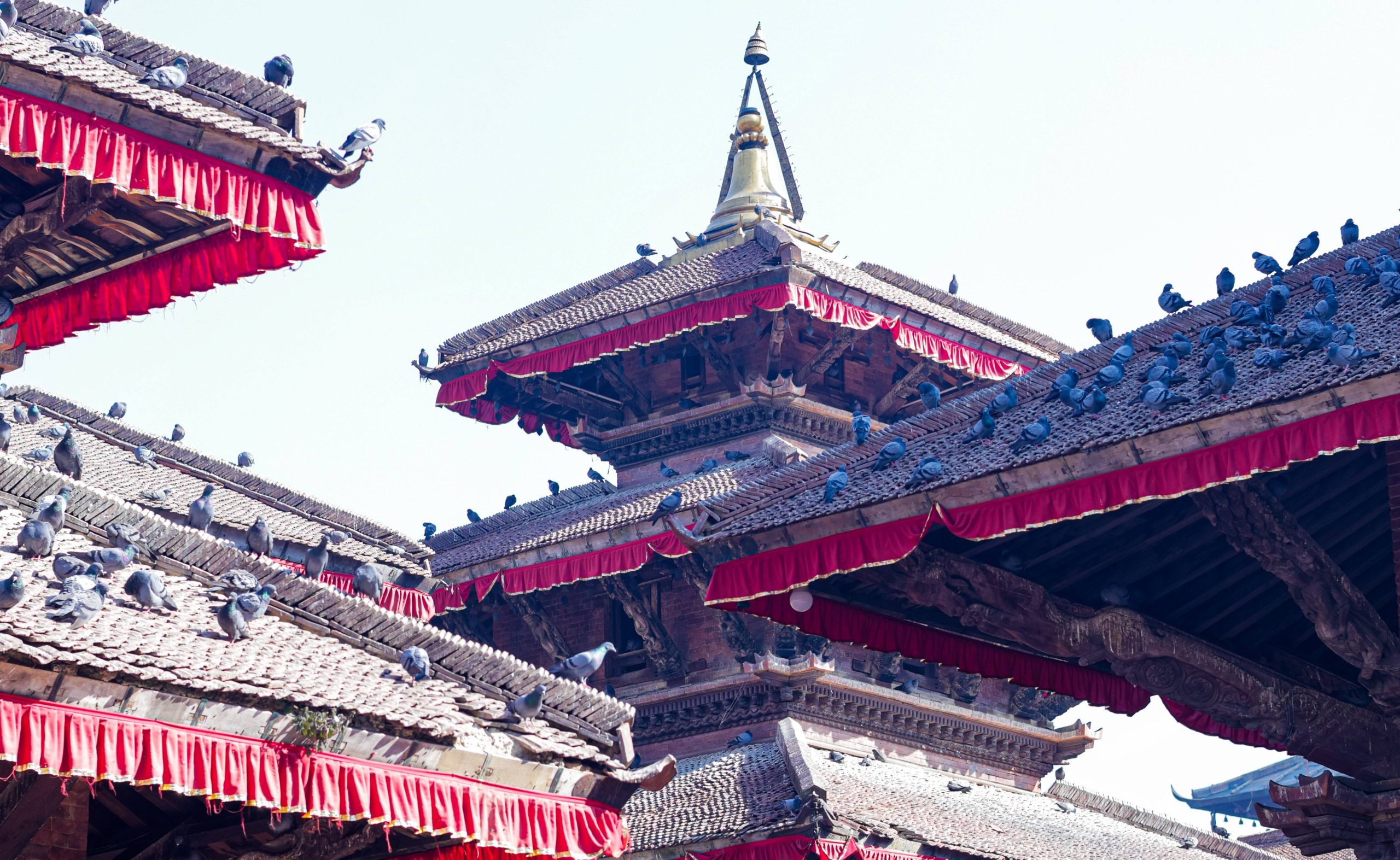
The Kathmandu Valley’s prosperity is deeply rooted in its central position between India and Tibet. This factor has long contributed to its wealth and cultural richness. The valley’s fertile basin and mild climate have made it an ideal region for agriculture, allowing the land to flourish under the care of its inhabitants. The Newar people are known for their artistry and craftsmanship and have passed down their skills through generations. They are leaving a lasting legacy in the architectural wonders of Patan and Bhaktapur.
Our nine-day trek offers a comprehensive exploration of this culturally and naturally rich region. We will journey through picturesque ridges and charming villages to the north and east of Kathmandu. From Nagarkot and Dhulikhel, we’ll enjoy expansive views of the Himalayan range, spanning from Langtang to Everest. The trek includes detailed visits to important sacred sites, including the Boudhanath Stupa, the historic town of Bhaktapur, and the artistic treasures of Patan. Along the way, we’ll traverse through ridges, terraced fields, and lush pine forests, engaging ourselves in both the natural beauty and the rich cultural heritage of the Kathmandu Valley.
We start our day with a vehicle ride to Budhanilkantha, where you can see the famous Vishnu statue resting on a bed of serpents. The name “Budhanilkantha” is derived from the ancient Newari language, where “Budha” signifies “old,” “Nila” translates to “blue,” and “Kantha” means “throat.” This historic temple is filled with history, spirituality, and beautiful architecture. Also called the “Sleeping Vishnu” or “Jalakshetra,” it reflects the deep respect and devotion that characterize Nepal’s heritage. After visiting Budhanilkantha, we will hike to the entrance of Shivapuri National Park. We continue along the park trail, which winds through the forest and ascends in switchbacks to the foot of the Nagi Gompa nunnery.
The next destination is Boudhanath, which has one of Nepal’s biggest spherical stupas. The town is built around this massive mandala. Buddhists come here in the evenings from all over the nation to perform mantra recitations and circumambulations. The act of walking around a stupa is known as a ‘Kora’ in Tibetan and Sherpa culture. At Boudhanath, you’ll meet a smiling and comforting crowd consisting of Sherpas, Tamang, exiled Tibetans, and Bhutanese, all connected by their Tibetan heritage. After exploring the area, check-in at a nearby hotel close to the stupa. You can also visit the Buddhist monasteries of the Gelugpa (yellow hat) school, the Nyingmapa (school of the ancients), and the Kagyupa. We will spend the night at the Rokpa Guest House near the stupa. The hike takes approximately 5 to 6 hours.
We start our day with a vehicle ride to Budhanilkantha, where you can see the famous Vishnu statue resting on a bed of serpents. The name “Budhanilkantha” is derived from the ancient Newari language, where “Budha” signifies “old,” “Nila” translates to “blue,” and “Kantha” means “throat.” This historic temple is filled with history, spirituality, and beautiful architecture. Also called the “Sleeping Vishnu” or “Jalakshetra,” it reflects the deep respect and devotion that characterize Nepal’s heritage. After visiting Budhanilkantha, we will hike to the entrance of Shivapuri National Park. We continue along the park trail, which winds through the forest and ascends in switchbacks to the foot of the Nagi Gompa nunnery.
The next destination is Boudhanath, which has one of Nepal’s biggest spherical stupas. The town is built around this massive mandala. Buddhists come here in the evenings from all over the nation to perform mantra recitations and circumambulations. The act of walking around a stupa is known as a ‘Kora’ in Tibetan and Sherpa culture. At Boudhanath, you’ll meet a smiling and comforting crowd consisting of Sherpas, Tamang, exiled Tibetans, and Bhutanese, all connected by their Tibetan heritage. After exploring the area, check-in at a nearby hotel close to the stupa. You can also visit the Buddhist monasteries of the Gelugpa (yellow hat) school, the Nyingmapa (school of the ancients), and the Kagyupa. We will spend the night at the Rokpa Guest House near the stupa. The hike takes approximately 5 to 6 hours.
We start our day with a vehicle ride to Budhanilkantha, where you can see the famous Vishnu statue resting on a bed of serpents. The name “Budhanilkantha” is derived from the ancient Newari language, where “Budha” signifies “old,” “Nila” translates to “blue,” and “Kantha” means “throat.” This historic temple is filled with history, spirituality, and beautiful architecture. Also called the “Sleeping Vishnu” or “Jalakshetra,” it reflects the deep respect and devotion that characterize Nepal’s heritage. After visiting Budhanilkantha, we will hike to the entrance of Shivapuri National Park. We continue along the park trail, which winds through the forest and ascends in switchbacks to the foot of the Nagi Gompa nunnery.
The next destination is Boudhanath, which has one of Nepal’s biggest spherical stupas. The town is built around this massive mandala. Buddhists come here in the evenings from all over the nation to perform mantra recitations and circumambulations. The act of walking around a stupa is known as a ‘Kora’ in Tibetan and Sherpa culture. At Boudhanath, you’ll meet a smiling and comforting crowd consisting of Sherpas, Tamang, exiled Tibetans, and Bhutanese, all connected by their Tibetan heritage. After exploring the area, check-in at a nearby hotel close to the stupa. You can also visit the Buddhist monasteries of the Gelugpa (yellow hat) school, the Nyingmapa (school of the ancients), and the Kagyupa. We will spend the night at the Rokpa Guest House near the stupa. The hike takes approximately 5 to 6 hours.
We start our day with a vehicle ride to Budhanilkantha, where you can see the famous Vishnu statue resting on a bed of serpents. The name “Budhanilkantha” is derived from the ancient Newari language, where “Budha” signifies “old,” “Nila” translates to “blue,” and “Kantha” means “throat.” This historic temple is filled with history, spirituality, and beautiful architecture. Also called the “Sleeping Vishnu” or “Jalakshetra,” it reflects the deep respect and devotion that characterize Nepal’s heritage. After visiting Budhanilkantha, we will hike to the entrance of Shivapuri National Park. We continue along the park trail, which winds through the forest and ascends in switchbacks to the foot of the Nagi Gompa nunnery.
The next destination is Boudhanath, which has one of Nepal’s biggest spherical stupas. The town is built around this massive mandala. Buddhists come here in the evenings from all over the nation to perform mantra recitations and circumambulations. The act of walking around a stupa is known as a ‘Kora’ in Tibetan and Sherpa culture. At Boudhanath, you’ll meet a smiling and comforting crowd consisting of Sherpas, Tamang, exiled Tibetans, and Bhutanese, all connected by their Tibetan heritage. After exploring the area, check-in at a nearby hotel close to the stupa. You can also visit the Buddhist monasteries of the Gelugpa (yellow hat) school, the Nyingmapa (school of the ancients), and the Kagyupa. We will spend the night at the Rokpa Guest House near the stupa. The hike takes approximately 5 to 6 hours.
We start our day with a vehicle ride to Budhanilkantha, where you can see the famous Vishnu statue resting on a bed of serpents. The name “Budhanilkantha” is derived from the ancient Newari language, where “Budha” signifies “old,” “Nila” translates to “blue,” and “Kantha” means “throat.” This historic temple is filled with history, spirituality, and beautiful architecture. Also called the “Sleeping Vishnu” or “Jalakshetra,” it reflects the deep respect and devotion that characterize Nepal’s heritage. After visiting Budhanilkantha, we will hike to the entrance of Shivapuri National Park. We continue along the park trail, which winds through the forest and ascends in switchbacks to the foot of the Nagi Gompa nunnery.
The next destination is Boudhanath, which has one of Nepal’s biggest spherical stupas. The town is built around this massive mandala. Buddhists come here in the evenings from all over the nation to perform mantra recitations and circumambulations. The act of walking around a stupa is known as a ‘Kora’ in Tibetan and Sherpa culture. At Boudhanath, you’ll meet a smiling and comforting crowd consisting of Sherpas, Tamang, exiled Tibetans, and Bhutanese, all connected by their Tibetan heritage. After exploring the area, check-in at a nearby hotel close to the stupa. You can also visit the Buddhist monasteries of the Gelugpa (yellow hat) school, the Nyingmapa (school of the ancients), and the Kagyupa. We will spend the night at the Rokpa Guest House near the stupa. The hike takes approximately 5 to 6 hours.
We start our day with a vehicle ride to Budhanilkantha, where you can see the famous Vishnu statue resting on a bed of serpents. The name “Budhanilkantha” is derived from the ancient Newari language, where “Budha” signifies “old,” “Nila” translates to “blue,” and “Kantha” means “throat.” This historic temple is filled with history, spirituality, and beautiful architecture. Also called the “Sleeping Vishnu” or “Jalakshetra,” it reflects the deep respect and devotion that characterize Nepal’s heritage. After visiting Budhanilkantha, we will hike to the entrance of Shivapuri National Park. We continue along the park trail, which winds through the forest and ascends in switchbacks to the foot of the Nagi Gompa nunnery.
The next destination is Boudhanath, which has one of Nepal’s biggest spherical stupas. The town is built around this massive mandala. Buddhists come here in the evenings from all over the nation to perform mantra recitations and circumambulations. The act of walking around a stupa is known as a ‘Kora’ in Tibetan and Sherpa culture. At Boudhanath, you’ll meet a smiling and comforting crowd consisting of Sherpas, Tamang, exiled Tibetans, and Bhutanese, all connected by their Tibetan heritage. After exploring the area, check-in at a nearby hotel close to the stupa. You can also visit the Buddhist monasteries of the Gelugpa (yellow hat) school, the Nyingmapa (school of the ancients), and the Kagyupa. We will spend the night at the Rokpa Guest House near the stupa. The hike takes approximately 5 to 6 hours.
We start our day with a vehicle ride to Budhanilkantha, where you can see the famous Vishnu statue resting on a bed of serpents. The name “Budhanilkantha” is derived from the ancient Newari language, where “Budha” signifies “old,” “Nila” translates to “blue,” and “Kantha” means “throat.” This historic temple is filled with history, spirituality, and beautiful architecture. Also called the “Sleeping Vishnu” or “Jalakshetra,” it reflects the deep respect and devotion that characterize Nepal’s heritage. After visiting Budhanilkantha, we will hike to the entrance of Shivapuri National Park. We continue along the park trail, which winds through the forest and ascends in switchbacks to the foot of the Nagi Gompa nunnery.
The next destination is Boudhanath, which has one of Nepal’s biggest spherical stupas. The town is built around this massive mandala. Buddhists come here in the evenings from all over the nation to perform mantra recitations and circumambulations. The act of walking around a stupa is known as a ‘Kora’ in Tibetan and Sherpa culture. At Boudhanath, you’ll meet a smiling and comforting crowd consisting of Sherpas, Tamang, exiled Tibetans, and Bhutanese, all connected by their Tibetan heritage. After exploring the area, check-in at a nearby hotel close to the stupa. You can also visit the Buddhist monasteries of the Gelugpa (yellow hat) school, the Nyingmapa (school of the ancients), and the Kagyupa. We will spend the night at the Rokpa Guest House near the stupa. The hike takes approximately 5 to 6 hours.
We start our day with a vehicle ride to Budhanilkantha, where you can see the famous Vishnu statue resting on a bed of serpents. The name “Budhanilkantha” is derived from the ancient Newari language, where “Budha” signifies “old,” “Nila” translates to “blue,” and “Kantha” means “throat.” This historic temple is filled with history, spirituality, and beautiful architecture. Also called the “Sleeping Vishnu” or “Jalakshetra,” it reflects the deep respect and devotion that characterize Nepal’s heritage. After visiting Budhanilkantha, we will hike to the entrance of Shivapuri National Park. We continue along the park trail, which winds through the forest and ascends in switchbacks to the foot of the Nagi Gompa nunnery.
The next destination is Boudhanath, which has one of Nepal’s biggest spherical stupas. The town is built around this massive mandala. Buddhists come here in the evenings from all over the nation to perform mantra recitations and circumambulations. The act of walking around a stupa is known as a ‘Kora’ in Tibetan and Sherpa culture. At Boudhanath, you’ll meet a smiling and comforting crowd consisting of Sherpas, Tamang, exiled Tibetans, and Bhutanese, all connected by their Tibetan heritage. After exploring the area, check-in at a nearby hotel close to the stupa. You can also visit the Buddhist monasteries of the Gelugpa (yellow hat) school, the Nyingmapa (school of the ancients), and the Kagyupa. We will spend the night at the Rokpa Guest House near the stupa. The hike takes approximately 5 to 6 hours.
We start our day with a vehicle ride to Budhanilkantha, where you can see the famous Vishnu statue resting on a bed of serpents. The name “Budhanilkantha” is derived from the ancient Newari language, where “Budha” signifies “old,” “Nila” translates to “blue,” and “Kantha” means “throat.” This historic temple is filled with history, spirituality, and beautiful architecture. Also called the “Sleeping Vishnu” or “Jalakshetra,” it reflects the deep respect and devotion that characterize Nepal’s heritage. After visiting Budhanilkantha, we will hike to the entrance of Shivapuri National Park. We continue along the park trail, which winds through the forest and ascends in switchbacks to the foot of the Nagi Gompa nunnery.
The next destination is Boudhanath, which has one of Nepal’s biggest spherical stupas. The town is built around this massive mandala. Buddhists come here in the evenings from all over the nation to perform mantra recitations and circumambulations. The act of walking around a stupa is known as a ‘Kora’ in Tibetan and Sherpa culture. At Boudhanath, you’ll meet a smiling and comforting crowd consisting of Sherpas, Tamang, exiled Tibetans, and Bhutanese, all connected by their Tibetan heritage. After exploring the area, check-in at a nearby hotel close to the stupa. You can also visit the Buddhist monasteries of the Gelugpa (yellow hat) school, the Nyingmapa (school of the ancients), and the Kagyupa. We will spend the night at the Rokpa Guest House near the stupa. The hike takes approximately 5 to 6 hours.