Location

Kathmandu & Pokhara

Duration

05 N / 06 D

Activities

Hiking

Accomodation

Hotel / Lodge

Meals

All Included

Group Size

Min 2 Pax

Best Time

Winter, Autumn & Spring

Program Itinerary:

Day 01 |

Arrival in Kathmandu.

As you touch down in Kathmandu, the vibrant energy of this historic city will welcome you. When we pick you up at Tribhuvan International Airport, you will be greeted and welcomed by our representative who will give you a “Khada” (a traditional ceremonial scarf). They will then help you to your hotel. After check-in, all of your necessary travel documents will be handed to you and there will be a short briefing about your tour.

Overnight stay at a hotel in Kathmandu.

Day 02 |

Sightseeing of Kathmandu Durbar Square, Swayambhunath Stupa & Patan Durbar Square.

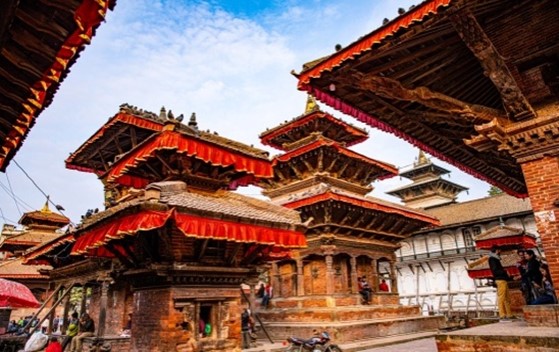
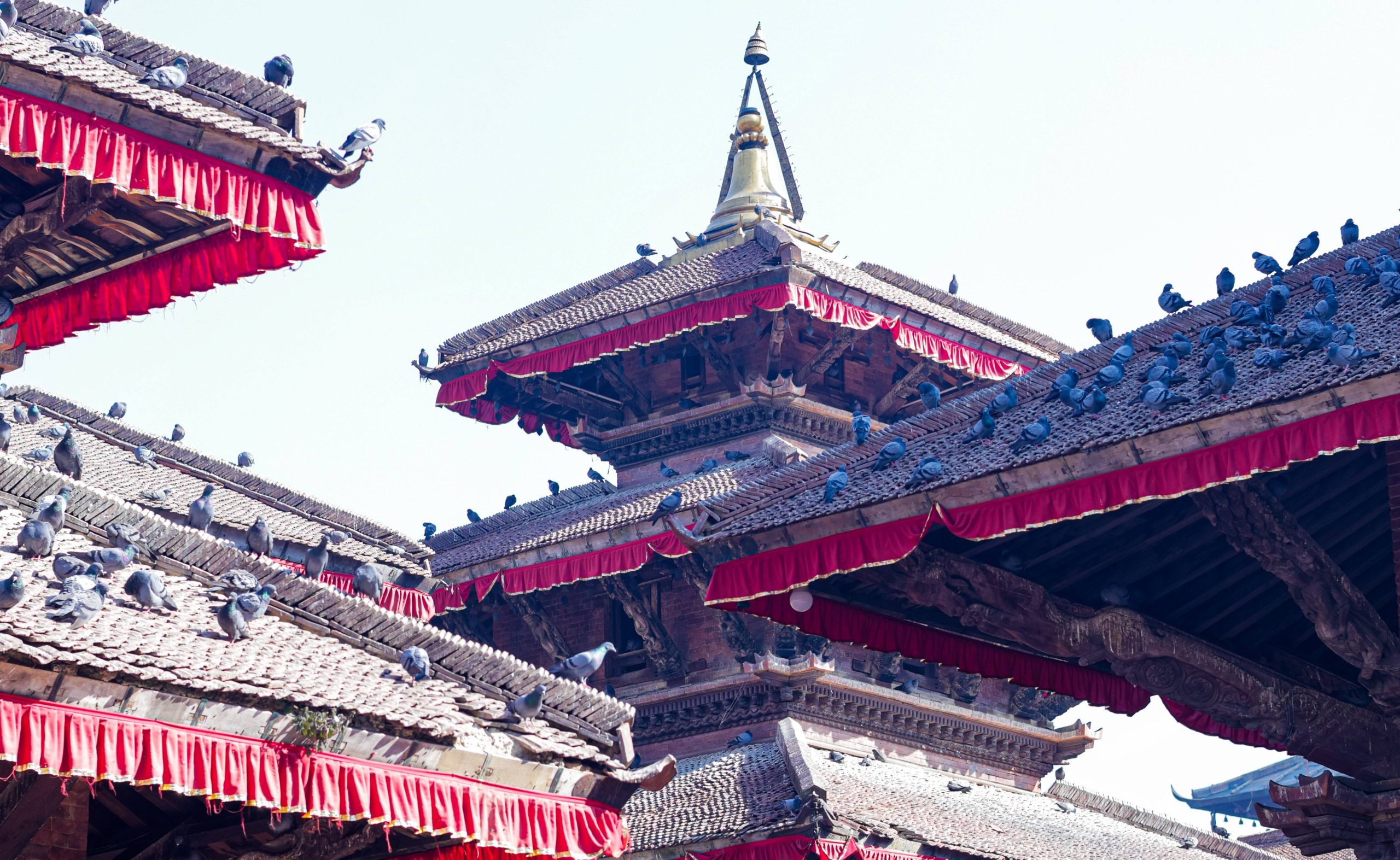
After breakfast at the hotel, you will commence your exploration of Kathmandu’s cultural riches. The morning will be dedicated to visiting Kathmandu Durbar Square, including Hanuman Dhoka, Parvati and Mahadev temple, Kumari Palace, Taleju temple, and more. Kathmandu Durbar Square, situated in the heart of Kathmandu, is a UNESCO World Heritage Site renowned for its stunning architecture, palaces, temples, and courtyards. It was once the royal palace of the Malla and Shah kings of Nepal. The square is a bustling hub of activity, with locals and tourists alike wandering amidst the intricately carved wooden buildings, ancient temples, and statues. It’s a vibrant showcase of Nepalese art, culture, and history.
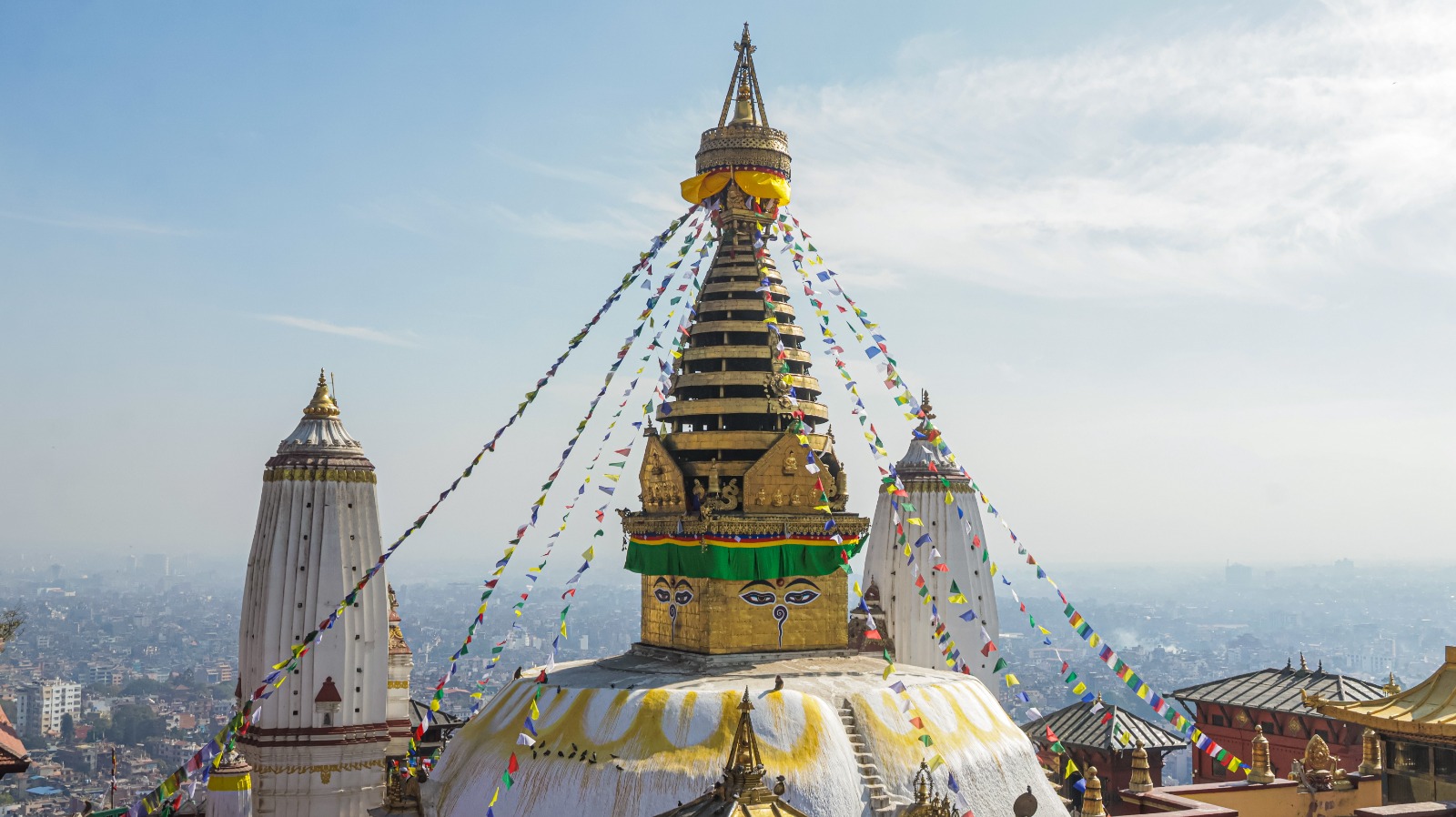
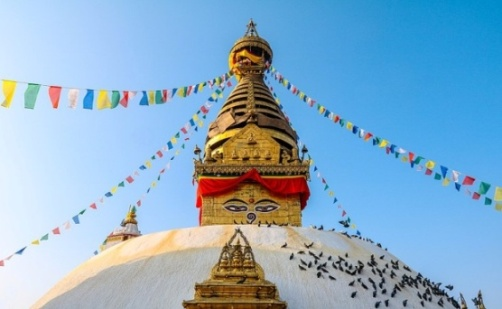
After that you will continue with visit to Swayambhunath Stupa, also known as the Monkey Temple, is one of Nepal’s oldest and most significant prehistoric Buddhist stupas. Located on a hillock two miles west of Kathmandu City, this world-renowned Buddhist chaitya was built over two thousand years ago. The hill of Swayambhunath is lush with evergreen trees bearing colorful, fragrant blossoms, and it contains various rocks and metal mines. The hill is lush with evergreen trees and vibrant blossoms, adding to its serene ambiance. Swayambhunath attracts pilgrims, tourists, and morning walkers alike, offering a mix of spiritual and natural beauty.
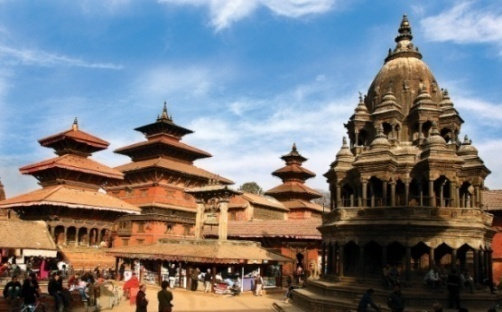
Lastly, you will visit Patan Durbar Square, located in the city of Patan (also known as Lalitpur), it is another UNESCO World Heritage Site. It features a rich collection of temples, palaces, statues, and courtyards dating back to the medieval period. The square is renowned for its fine Newari architecture, with intricately carved wooden windows, doors, and struts adorning many of the buildings. Renowned for its intricate Newar architecture, the square features beautifully carved wooden windows, doors, and struts, as well as an array of stunning temples, statues, and shrines.

Overnight stay at a hotel in Kathmandu.
Day 03 |

Transfer to Pokhara. [210 KM / Approx. 7 – 8 hours’ drive]

The journey from Kathmandu to Pokhara is a scenic drive that covers approximately 210 kilometers and typically takes around 7-8 hours, depending on road conditions and traffic. Start your drive early in the morning from Kathmandu to make the most of the day. Upon arrival in Pokhara, check into your hotel and take some time to rest and freshen up.

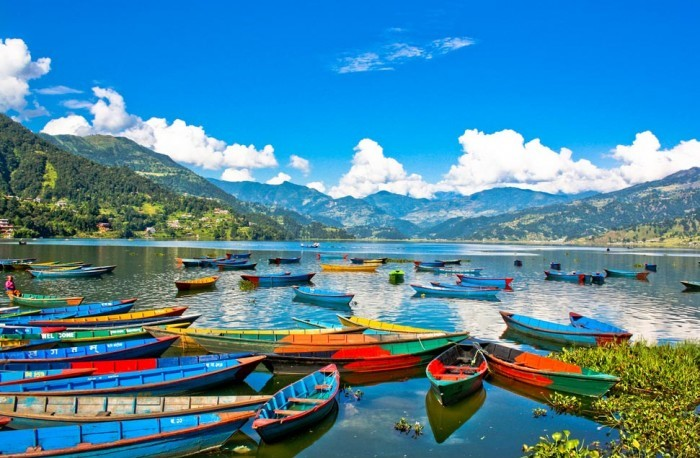
In the late afternoon or early evening, head to the famous Lakeside area of Pokhara. This vibrant area is known for its picturesque views of Phewa Lake, bustling markets, and a variety of cafes and restaurants. Spend your time strolling along the lakeside, enjoying the serene atmosphere.

Overnight stay at a hotel in Pokhara.
Day 04 |

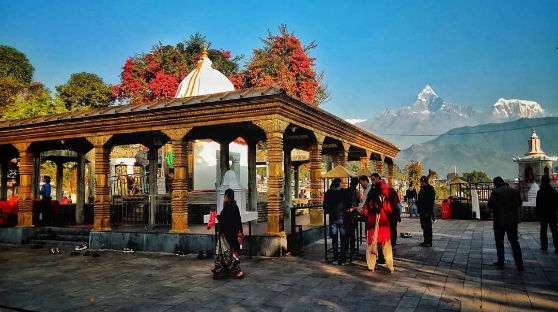
Early morning sunrise excursion to Sarangkot. Visit Bindabasini Temple, World Peace Pagoda, Devi’s Fall & Gupteshwor Mahadev Cave. Boating at Phewa Lake, visit Tal Barahi Temple.

Early in the morning, you will depart for Sarangkot, a hill in the north-west region of Pokhara that overlooks the Annapurna and Dhaulagiri ranges in the north and the main city in the south. We stop in Sarangkot and enjoy amazing views of the sun as it sets in the mighty Himalayas. From here, we also get a view of the Pokhara city below and the abundant Phewa Lake.
Then, visit Bindabasini temple is one of the famous temples of Nepal. It is devoted to the Hindu goddess Bindabasini, a Bhagawati who is believed to be the guardian deity of the city of lakes. Besides that, the temple is a recognized sightseeing attraction in Pokhara. It is the oldest temple in Pokhara. Enthroned on top of a small hill, the Bindabasini temple rests quietly beside an old busy bazaar, 3002 feet above sea level gawking at the glorious Himalayan ranges. The temple is like a breath of fresh air amid the hullabaloo of Pokhara. Later you will drive back to hotel for the breakfast.
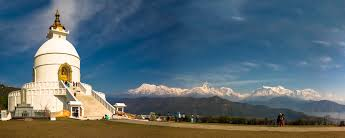
After breakfast, you will visit World Peace Pagoda. The World Peace Pagoda, also known as Shanti Stupa, is a beautiful white stupa built by Buddhist monks from the Japanese Nipponzan Myohoji organization. It stands as a symbol of peace and provides panoramic views of the Annapurna range, Phewa Lake, and the Pokhara Valley.
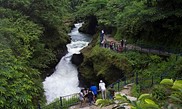
Afterwards, visit Devi’s Fall, a unique waterfall that flows into an underground tunnel. This natural wonder is named after a Swiss tourist who tragically drowned there. Just across the road from Devi’s Fall is the Gupeshwor Mahadev Cave, a sacred cave with a shrine dedicated to Lord Shiva. The cave is notable for its underground waterfall, which is the outlet of Devi’s Fall.
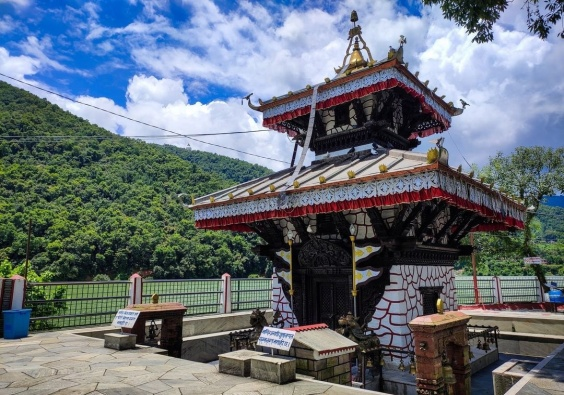
Later in the afternoon, head to Phewa Lake for a relaxing boat ride. Phewa Lake is the second largest lake in Nepal and a major tourist attraction in Pokhara. During your boat ride, visit the Tal Barahi Temple, situated on a small island in the middle of the lake. This two-story pagoda is dedicated to the Hindu goddess Barahi and is a significant pilgrimage site.

After visiting these sites, enjoy a free afternoon to explore Pokhara at your own pace or relax at your hotel.

Overnight stay at a hotel in Pokhara.
Day 05 |

Drive back to Kathmandu.

After breakfast, you will drive back to Kathmandu, which takes around 7-8 hours, passing through scenic landscapes and small towns on the way. Upon reaching Kathmandu, you will be transferred to hotel, check into our hotel and have some leisure time to explore the city on our own.

Overnight stay at a hotel in Kathmandu.

Day 06 |

Final Departure.

After breakfast, you will be transferred to the airport for your departure flight, concluding your unforgettable journey through the cultural and natural wonders of Nepal.

[Note: This program is given as an indication according to the indications known to date. It may be subject to changes on site due to local data. These changes will always be made in the best possible way, in the spirit of the original program.]

**END OF SERVICES**

***HAPPY JOURNEY**
Trip Details

The Kathmandu Valley’s prosperity is deeply rooted in its central position between India and Tibet. This factor has long contributed to its wealth and cultural richness. The valley’s fertile basin and mild climate have made it an ideal region for agriculture, allowing the land to flourish under the care of its inhabitants. The Newar people are known for their artistry and craftsmanship and have passed down their skills through generations. They are leaving a lasting legacy in the architectural wonders of Patan and Bhaktapur.

Our nine-day trek offers a comprehensive exploration of this culturally and naturally rich region. We will journey through picturesque ridges and charming villages to the north and east of Kathmandu. From Nagarkot and Dhulikhel, we’ll enjoy expansive views of the Himalayan range, spanning from Langtang to Everest. The trek includes detailed visits to important sacred sites, including the Boudhanath Stupa, the historic town of Bhaktapur, and the artistic treasures of Patan. Along the way, we’ll traverse through ridges, terraced fields, and lush pine forests, engaging ourselves in both the natural beauty and the rich cultural heritage of the Kathmandu Valley.

Itinerary

Day 1   From Kathmandu to Nagi Gompa to Boudhanath

We start our day with a vehicle ride to Budhanilkantha, where you can see the famous Vishnu statue resting on a bed of serpents. The name “Budhanilkantha” is derived from the ancient Newari language, where “Budha” signifies “old,” “Nila” translates to “blue,” and “Kantha” means “throat.” This historic temple is filled with history, spirituality, and beautiful architecture. Also called the “Sleeping Vishnu” or “Jalakshetra,” it reflects the deep respect and devotion that characterize Nepal’s heritage. After visiting Budhanilkantha, we will hike to the entrance of Shivapuri National Park. We continue along the park trail, which winds through the forest and ascends in switchbacks to the foot of the Nagi Gompa nunnery.

The next destination is Boudhanath, which has one of Nepal’s biggest spherical stupas. The town is built around this massive mandala. Buddhists come here in the evenings from all over the nation to perform mantra recitations and circumambulations. The act of walking around a stupa is known as a ‘Kora’ in Tibetan and Sherpa culture. At Boudhanath, you’ll meet a smiling and comforting crowd consisting of Sherpas, Tamang, exiled Tibetans, and Bhutanese, all connected by their Tibetan heritage. After exploring the area, check-in at a nearby hotel close to the stupa. You can also visit the Buddhist monasteries of the Gelugpa (yellow hat) school, the Nyingmapa (school of the ancients), and the Kagyupa. We will spend the night at the Rokpa Guest House near the stupa. The hike takes approximately 5 to 6 hours.

We start our day with a vehicle ride to Budhanilkantha, where you can see the famous Vishnu statue resting on a bed of serpents. The name “Budhanilkantha” is derived from the ancient Newari language, where “Budha” signifies “old,” “Nila” translates to “blue,” and “Kantha” means “throat.” This historic temple is filled with history, spirituality, and beautiful architecture. Also called the “Sleeping Vishnu” or “Jalakshetra,” it reflects the deep respect and devotion that characterize Nepal’s heritage. After visiting Budhanilkantha, we will hike to the entrance of Shivapuri National Park. We continue along the park trail, which winds through the forest and ascends in switchbacks to the foot of the Nagi Gompa nunnery.

The next destination is Boudhanath, which has one of Nepal’s biggest spherical stupas. The town is built around this massive mandala. Buddhists come here in the evenings from all over the nation to perform mantra recitations and circumambulations. The act of walking around a stupa is known as a ‘Kora’ in Tibetan and Sherpa culture. At Boudhanath, you’ll meet a smiling and comforting crowd consisting of Sherpas, Tamang, exiled Tibetans, and Bhutanese, all connected by their Tibetan heritage. After exploring the area, check-in at a nearby hotel close to the stupa. You can also visit the Buddhist monasteries of the Gelugpa (yellow hat) school, the Nyingmapa (school of the ancients), and the Kagyupa. We will spend the night at the Rokpa Guest House near the stupa. The hike takes approximately 5 to 6 hours.

We start our day with a vehicle ride to Budhanilkantha, where you can see the famous Vishnu statue resting on a bed of serpents. The name “Budhanilkantha” is derived from the ancient Newari language, where “Budha” signifies “old,” “Nila” translates to “blue,” and “Kantha” means “throat.” This historic temple is filled with history, spirituality, and beautiful architecture. Also called the “Sleeping Vishnu” or “Jalakshetra,” it reflects the deep respect and devotion that characterize Nepal’s heritage. After visiting Budhanilkantha, we will hike to the entrance of Shivapuri National Park. We continue along the park trail, which winds through the forest and ascends in switchbacks to the foot of the Nagi Gompa nunnery.

The next destination is Boudhanath, which has one of Nepal’s biggest spherical stupas. The town is built around this massive mandala. Buddhists come here in the evenings from all over the nation to perform mantra recitations and circumambulations. The act of walking around a stupa is known as a ‘Kora’ in Tibetan and Sherpa culture. At Boudhanath, you’ll meet a smiling and comforting crowd consisting of Sherpas, Tamang, exiled Tibetans, and Bhutanese, all connected by their Tibetan heritage. After exploring the area, check-in at a nearby hotel close to the stupa. You can also visit the Buddhist monasteries of the Gelugpa (yellow hat) school, the Nyingmapa (school of the ancients), and the Kagyupa. We will spend the night at the Rokpa Guest House near the stupa. The hike takes approximately 5 to 6 hours.

We start our day with a vehicle ride to Budhanilkantha, where you can see the famous Vishnu statue resting on a bed of serpents. The name “Budhanilkantha” is derived from the ancient Newari language, where “Budha” signifies “old,” “Nila” translates to “blue,” and “Kantha” means “throat.” This historic temple is filled with history, spirituality, and beautiful architecture. Also called the “Sleeping Vishnu” or “Jalakshetra,” it reflects the deep respect and devotion that characterize Nepal’s heritage. After visiting Budhanilkantha, we will hike to the entrance of Shivapuri National Park. We continue along the park trail, which winds through the forest and ascends in switchbacks to the foot of the Nagi Gompa nunnery.

The next destination is Boudhanath, which has one of Nepal’s biggest spherical stupas. The town is built around this massive mandala. Buddhists come here in the evenings from all over the nation to perform mantra recitations and circumambulations. The act of walking around a stupa is known as a ‘Kora’ in Tibetan and Sherpa culture. At Boudhanath, you’ll meet a smiling and comforting crowd consisting of Sherpas, Tamang, exiled Tibetans, and Bhutanese, all connected by their Tibetan heritage. After exploring the area, check-in at a nearby hotel close to the stupa. You can also visit the Buddhist monasteries of the Gelugpa (yellow hat) school, the Nyingmapa (school of the ancients), and the Kagyupa. We will spend the night at the Rokpa Guest House near the stupa. The hike takes approximately 5 to 6 hours.

We start our day with a vehicle ride to Budhanilkantha, where you can see the famous Vishnu statue resting on a bed of serpents. The name “Budhanilkantha” is derived from the ancient Newari language, where “Budha” signifies “old,” “Nila” translates to “blue,” and “Kantha” means “throat.” This historic temple is filled with history, spirituality, and beautiful architecture. Also called the “Sleeping Vishnu” or “Jalakshetra,” it reflects the deep respect and devotion that characterize Nepal’s heritage. After visiting Budhanilkantha, we will hike to the entrance of Shivapuri National Park. We continue along the park trail, which winds through the forest and ascends in switchbacks to the foot of the Nagi Gompa nunnery.

The next destination is Boudhanath, which has one of Nepal’s biggest spherical stupas. The town is built around this massive mandala. Buddhists come here in the evenings from all over the nation to perform mantra recitations and circumambulations. The act of walking around a stupa is known as a ‘Kora’ in Tibetan and Sherpa culture. At Boudhanath, you’ll meet a smiling and comforting crowd consisting of Sherpas, Tamang, exiled Tibetans, and Bhutanese, all connected by their Tibetan heritage. After exploring the area, check-in at a nearby hotel close to the stupa. You can also visit the Buddhist monasteries of the Gelugpa (yellow hat) school, the Nyingmapa (school of the ancients), and the Kagyupa. We will spend the night at the Rokpa Guest House near the stupa. The hike takes approximately 5 to 6 hours.

We start our day with a vehicle ride to Budhanilkantha, where you can see the famous Vishnu statue resting on a bed of serpents. The name “Budhanilkantha” is derived from the ancient Newari language, where “Budha” signifies “old,” “Nila” translates to “blue,” and “Kantha” means “throat.” This historic temple is filled with history, spirituality, and beautiful architecture. Also called the “Sleeping Vishnu” or “Jalakshetra,” it reflects the deep respect and devotion that characterize Nepal’s heritage. After visiting Budhanilkantha, we will hike to the entrance of Shivapuri National Park. We continue along the park trail, which winds through the forest and ascends in switchbacks to the foot of the Nagi Gompa nunnery.

The next destination is Boudhanath, which has one of Nepal’s biggest spherical stupas. The town is built around this massive mandala. Buddhists come here in the evenings from all over the nation to perform mantra recitations and circumambulations. The act of walking around a stupa is known as a ‘Kora’ in Tibetan and Sherpa culture. At Boudhanath, you’ll meet a smiling and comforting crowd consisting of Sherpas, Tamang, exiled Tibetans, and Bhutanese, all connected by their Tibetan heritage. After exploring the area, check-in at a nearby hotel close to the stupa. You can also visit the Buddhist monasteries of the Gelugpa (yellow hat) school, the Nyingmapa (school of the ancients), and the Kagyupa. We will spend the night at the Rokpa Guest House near the stupa. The hike takes approximately 5 to 6 hours.

We start our day with a vehicle ride to Budhanilkantha, where you can see the famous Vishnu statue resting on a bed of serpents. The name “Budhanilkantha” is derived from the ancient Newari language, where “Budha” signifies “old,” “Nila” translates to “blue,” and “Kantha” means “throat.” This historic temple is filled with history, spirituality, and beautiful architecture. Also called the “Sleeping Vishnu” or “Jalakshetra,” it reflects the deep respect and devotion that characterize Nepal’s heritage. After visiting Budhanilkantha, we will hike to the entrance of Shivapuri National Park. We continue along the park trail, which winds through the forest and ascends in switchbacks to the foot of the Nagi Gompa nunnery.

The next destination is Boudhanath, which has one of Nepal’s biggest spherical stupas. The town is built around this massive mandala. Buddhists come here in the evenings from all over the nation to perform mantra recitations and circumambulations. The act of walking around a stupa is known as a ‘Kora’ in Tibetan and Sherpa culture. At Boudhanath, you’ll meet a smiling and comforting crowd consisting of Sherpas, Tamang, exiled Tibetans, and Bhutanese, all connected by their Tibetan heritage. After exploring the area, check-in at a nearby hotel close to the stupa. You can also visit the Buddhist monasteries of the Gelugpa (yellow hat) school, the Nyingmapa (school of the ancients), and the Kagyupa. We will spend the night at the Rokpa Guest House near the stupa. The hike takes approximately 5 to 6 hours.

We start our day with a vehicle ride to Budhanilkantha, where you can see the famous Vishnu statue resting on a bed of serpents. The name “Budhanilkantha” is derived from the ancient Newari language, where “Budha” signifies “old,” “Nila” translates to “blue,” and “Kantha” means “throat.” This historic temple is filled with history, spirituality, and beautiful architecture. Also called the “Sleeping Vishnu” or “Jalakshetra,” it reflects the deep respect and devotion that characterize Nepal’s heritage. After visiting Budhanilkantha, we will hike to the entrance of Shivapuri National Park. We continue along the park trail, which winds through the forest and ascends in switchbacks to the foot of the Nagi Gompa nunnery.

The next destination is Boudhanath, which has one of Nepal’s biggest spherical stupas. The town is built around this massive mandala. Buddhists come here in the evenings from all over the nation to perform mantra recitations and circumambulations. The act of walking around a stupa is known as a ‘Kora’ in Tibetan and Sherpa culture. At Boudhanath, you’ll meet a smiling and comforting crowd consisting of Sherpas, Tamang, exiled Tibetans, and Bhutanese, all connected by their Tibetan heritage. After exploring the area, check-in at a nearby hotel close to the stupa. You can also visit the Buddhist monasteries of the Gelugpa (yellow hat) school, the Nyingmapa (school of the ancients), and the Kagyupa. We will spend the night at the Rokpa Guest House near the stupa. The hike takes approximately 5 to 6 hours.

We start our day with a vehicle ride to Budhanilkantha, where you can see the famous Vishnu statue resting on a bed of serpents. The name “Budhanilkantha” is derived from the ancient Newari language, where “Budha” signifies “old,” “Nila” translates to “blue,” and “Kantha” means “throat.” This historic temple is filled with history, spirituality, and beautiful architecture. Also called the “Sleeping Vishnu” or “Jalakshetra,” it reflects the deep respect and devotion that characterize Nepal’s heritage. After visiting Budhanilkantha, we will hike to the entrance of Shivapuri National Park. We continue along the park trail, which winds through the forest and ascends in switchbacks to the foot of the Nagi Gompa nunnery.

The next destination is Boudhanath, which has one of Nepal’s biggest spherical stupas. The town is built around this massive mandala. Buddhists come here in the evenings from all over the nation to perform mantra recitations and circumambulations. The act of walking around a stupa is known as a ‘Kora’ in Tibetan and Sherpa culture. At Boudhanath, you’ll meet a smiling and comforting crowd consisting of Sherpas, Tamang, exiled Tibetans, and Bhutanese, all connected by their Tibetan heritage. After exploring the area, check-in at a nearby hotel close to the stupa. You can also visit the Buddhist monasteries of the Gelugpa (yellow hat) school, the Nyingmapa (school of the ancients), and the Kagyupa. We will spend the night at the Rokpa Guest House near the stupa. The hike takes approximately 5 to 6 hours.

What’s Included?

What’s not Included?

Kathmandu & Pokhara, 6 Days and Nights 5

Explore the Kathmandu Valley Trek and experience Nepal’s rich heritage and natural beauty. Kathmandu, surrounded by hills, is famous for its ancient temples and palaces. From Nagarkot and Dhulikhel, enjoy amazing views of the Himalayan ranges.

Send us a message

Similar Trips